
Ranked: 7 Professional Gasoline Chainsaw Models for Every Logging Scale
Ranked: 7 Professional Gasoline Chainsaw Models for Every Logging Scale
Seven Hanakawa professional gasoline chainsaw models cover the full working range, from a 31.8cc, 1.5kW saw for light firewood work up to a 105.7cc, 11kg machine specified for industrial heavy logging and giant-tree cutting. This list ranks them from the lightest documented job scale (Rank 1) to the heaviest (Rank 7) and states the displacement, rated power, net weight and specified applications behind each position, so that logging contractors, dealers and procurement managers can shortlist by the work in front of them instead of by the biggest number on a specification sheet.
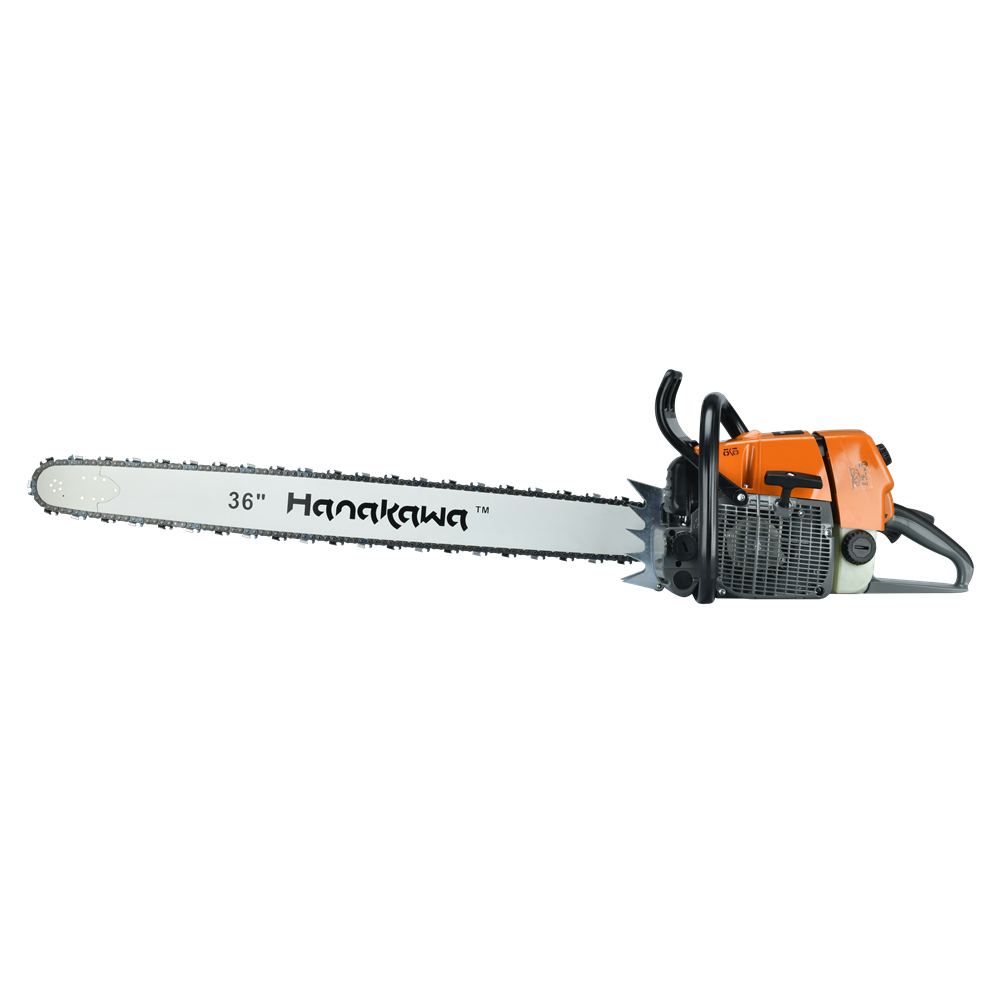
The Hanakawa H992: 91.6cc, 5.2kW, 7.7kg — the highest rated power in the seven-model range, specified for large timber felling and old-growth forest logging.
Ranking saws by engine displacement is common and misleading. Inside this single range, the H971 displaces 70.7cc and is rated 4.0kW, the H872 displaces 72cc and is rated 3.6kW, and the H9105 has the largest displacement at 105.7cc yet a rated output of 4.8kW — below the 5.2kW of the smaller 91.6cc H992. Displacement describes the engine; rated power, net weight and the documented application list describe the job. This ranking is built on the last three.
The Problem: A Model Number Does Not Describe a Job
Buyers at the decision stage usually compare two figures — cc and kW — and both can point them to the wrong saw. Rated power does not track displacement in a straight line across this lineup: the 72cc models are rated 3.6kW, the 70.7cc H971 is rated 4.0kW, and the largest saw in the range is not the most powerful one. A shortlist sorted by displacement will therefore omit the machines built for the heaviest work, and a shortlist sorted by rated kilowatts alone will ignore how much weight the operator has to carry all day.
Choosing the wrong scale has a measurable operating cost. Hanakawa's published troubleshooting guidance lists long, continuous maximum-load operation among the causes of overheating and automatic shutdown, and lists a clogged air filter and a blocked muffler spark arrester among the causes of power loss under load. An undersized saw on large hardwood is pushed into exactly that overload zone, while an oversized saw on small stems adds kilograms without adding output. The decision comes down to three questions: which working scale the job belongs to, which model is documented for that scale, and what the saw costs across its service life.
Market Context: What Is Happening in Professional Gasoline Chainsaws in 2026
Gasoline remains the dominant power source in this category. Mordor Intelligence reports that gas-powered units held a 54.3% share of the global chainsaw market in its 2025/2026 analysis, and Straits Research values the global chainsaw market at USD 4.46 billion in 2026, projected to reach USD 5.89 billion by 2034. For professional forestry work — long daily hours, dense hardwood, remote sites without charging infrastructure — that dominance is structural rather than habitual.
Two references matter when a saw is specified for forest service work. ISO 11681-1:2022 is the current international standard covering safety requirements and testing of portable, combustion-engine, hand-held chainsaws for forest service, so buyers should confirm which standard a supplier's model documentation references. For customs and import documentation, chainsaws with a self-contained non-electric motor fall under HTS code 8467.81.
The supply side has also shifted toward factory-direct and OEM manufacturing. Zhejiang Hehong Tools Co., Ltd., established in 2006, manufactures the Hanakawa range of gasoline chainsaws, brush cutters and hedge trimmers together with a full spare-parts line, exports approximately 85% of its output, and lists Eastern Europe, Russia, South America and Southeast Asia among its main markets. The footprint behind the range is 40,000 m² including more than 20,000 m² of production area, with 133 employees, a 12-engineer R&D team and annual output of 2,500,000 units.
What Stays the Same Across the Seven Models
Before the ranking itself, it is worth noting what does not change between models. All seven share a common construction specification: a magnesium alloy crankcase, an aluminum alloy cylinder and a glass-reinforced PA nylon outer housing. The compact models in the family, the H932 and H945, additionally list a hardened alloy steel crankshaft. Because the same material set runs from the smallest to the largest saw, service procedures, lubricants and consumables stay consistent across a mixed fleet.
Parts interchangeability is documented model by model: the H932 is all-parts compatible with the genuine 180-class saw, the H945 with the 250-class, the H959 with the 361-class, the H972 with the 381-class, the H971 with the 440-class, the H992 with the 660-class and the H9105 with the 070-class. For a contractor or a dealer, that ecosystem decides how quickly a stopped saw returns to work — and, as the cost section below shows, how much the repair costs.
Behind all seven sits in-house quality control covering raw-material incoming verification, semi-finished component testing, assembly spot checks and finished-goods performance testing before shipment. The factory holds Level-3 Work Safety Standardization certification, is recognised as a high-tech enterprise and a regional innovative enterprise, and runs the Jinhua R&D Center for green and high-efficiency garden power tools, which supports parameter adjustment, product optimisation and new-model development for OEM and ODM partners.
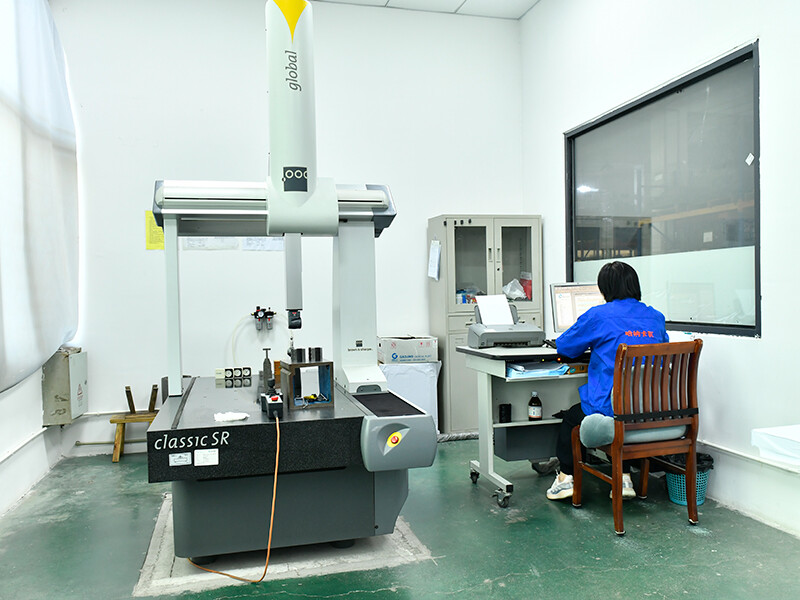
Dimensional inspection equipment in the Hanakawa production chain, part of the in-house process that covers raw-material verification, component testing, assembly spot checks and finished-goods performance testing.
The Ranking: Seven Professional Gasoline Chainsaw Models by Logging Scale
The list below ranks the seven models in ascending order of documented working scale. Rank 1 is the lightest duty cycle in the range and Rank 7 is the heaviest. Rank reflects the job a model is specified for and the environment it is built to survive, not a general verdict on quality, because every model in the list uses the same core material specification.
Rank 1H932 — 31.8cc, 1.5kW, 4.1kg — Light Firewood and Yard Work
The H932 is the entry point of the range and the only model here below 40cc: 31.8cc, 1.5kW rated output, 4.1kg net weight and a maximum engine speed of 12,500rpm. Its documented applications are small-scale firewood cutting and light-duty farm work — branch pruning, thin-log firewood splitting, small-diameter felling and overgrown shrub clearance in courtyards, park green belts and gentle terrain. The application data for this class of work lists light weight, low vibration, an easy cold start and a basic kickback safety brake as the requirements, and the H932 is documented with low fuel consumption and easy handling, which is what keeps a light saw in daily use. It is the correct choice when the limiting factor is the operator's endurance rather than the tree.
Rank 2H872 — 72cc, 3.6kW, 6.3kg — Farm Hardwood, Orchard Trunks and Batch Firewood
The H872 displaces 72cc, is rated 3.6kW, weighs 6.3kg net and runs up to 11,500rpm, with the family's magnesium alloy crankcase, aluminum alloy cylinder and glass-reinforced PA nylon housing. Its documented applications are traditional small-scale forestry, farm hardwood cutting, orchard trunk pruning and batch firewood processing. It ranks second because the working scale it is specified for is light to medium but still involves hardwood: orchard trunk renovation and batch firewood production need more displacement than a compact saw provides, yet they do not run all day under industrial load. The recorded requirements for farm and orchard work in this class are durable long-hour intermittent operation, high spare-parts versatility and a dust-resistant air filter. Note that the H872 shares its 72cc, 3.6kW rating with the H972 and H972E, but not their application profile.
Rank 3H959 — 59cc, 3.4kW, 5.7kg — Commercial Forestry, Municipal Greening and Construction Clearing
The H959 is rated 59cc and 3.4kW, weighs 5.7kg net and reaches 11,500rpm. Its documented applications are commercial forestry logging, municipal greening, construction clearing and road obstacle removal, and it is documented as all-parts compatible with the 361-class saw. Rank 3 is the first step into contractor duty: this is the lightest model in the range specified for commercial and municipal work, and it fits days that mix medium-diameter felling, urban large-tree pruning and site clearance. The requirements recorded for that class of work are magnesium alloy crankcase heat dissipation, heavy-load anti-stall performance and long continuous working stability. At 5.7kg and 3.4kW, the H959 carries the least weight of the commercial-grade models in this list.
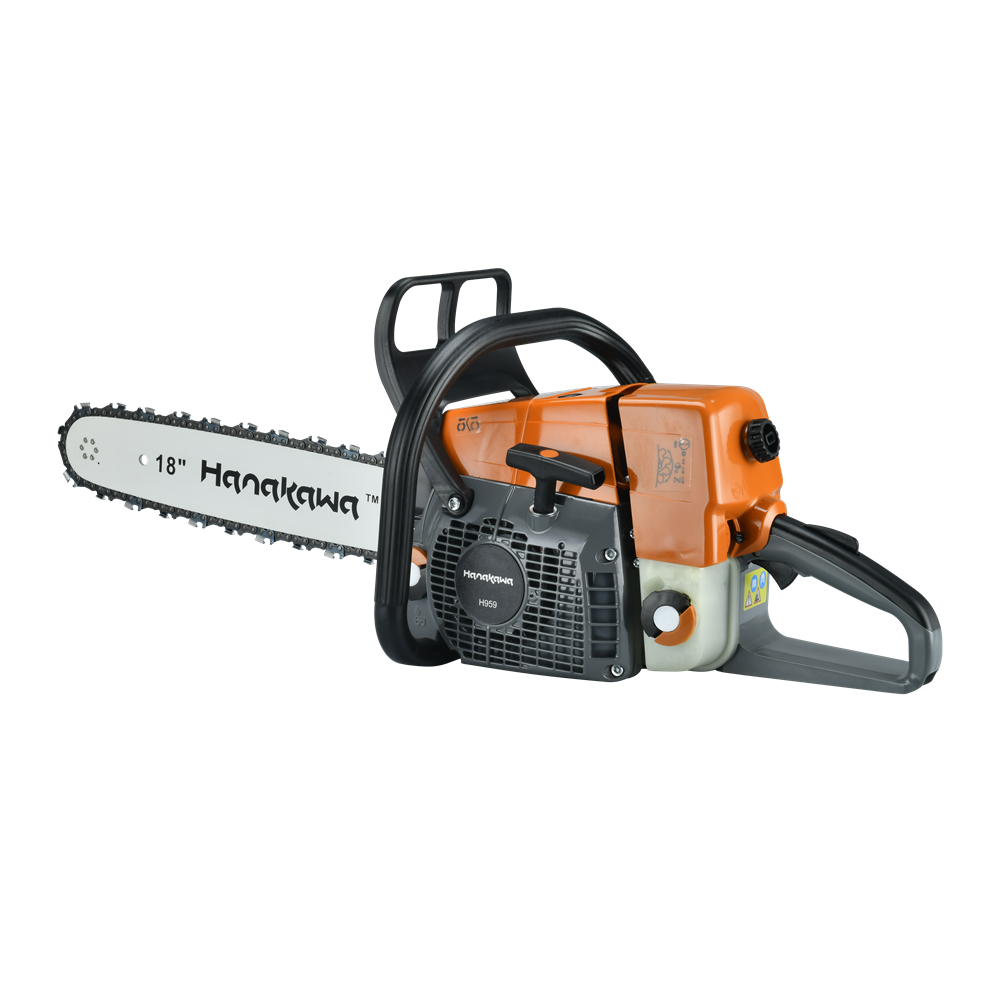
The Hanakawa H959 (59cc, 3.4kW, 5.7kg) is the lightest model in the range specified for commercial forestry logging, municipal greening and construction clearing.
Rank 4H971 — 70.7cc, 4.0kW, 6.1kg — Large-Scale Commercial Logging and Forest Thinning
The H971 displaces 70.7cc, is rated 4.0kW, weighs 6.1kg net and runs up to 12,000rpm — the highest rated engine speed in the 70cc group of this range. Its documented applications are large-scale commercial logging, hardwood processing, engineering demolition and forest thinning. It is documented as all-parts compatible with the 440-class platform, and the selection guidance for heavy-duty hardwood felling names torque, cylinder robustness, heat-dissipation performance, dust resistance and aftermarket parts accessibility as the evaluation criteria. The inclusion rationale is arithmetic: the highest rated power of the 70.7cc–72cc group, at the lowest net weight of that group.
Rank 5H972E — 72cc, 3.6kW, 6.6kg — Intensive Forestry Logging and Hardwood Felling
The H972E is rated 72cc and 3.6kW, weighs 6.6kg net and reaches 11,500rpm. Its documented application list is the broadest of the 72cc group: commercial intensive forestry logging, hardwood felling, mountain forest operation, construction site clearing, post-disaster emergency rescue, municipal road obstacle removal and large orchard trunk pruning. It ranks fifth because of the intensity of the environment rather than the size of the engine — the application data for intensive commercial logging and post-storm rescue records a reinforced transmission system, strong low-speed torque and high-temperature durability under full load as the requirements of that work.
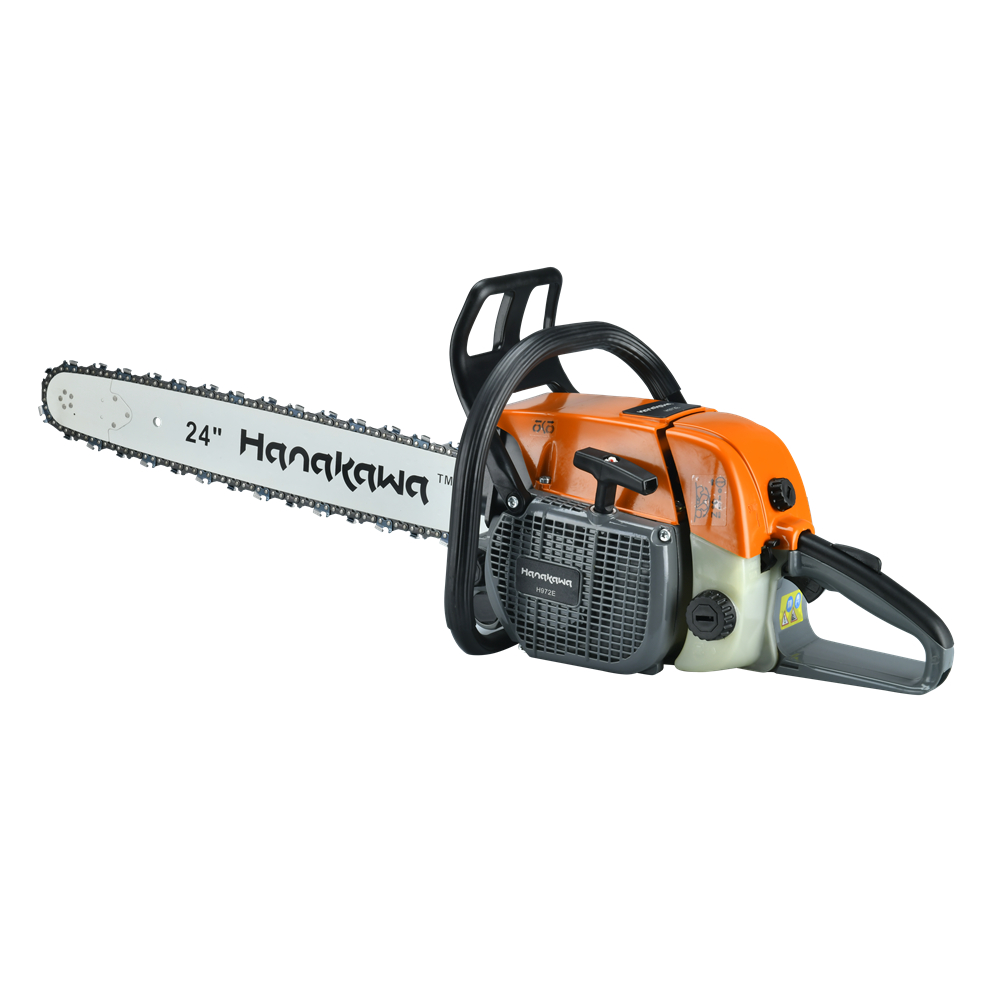
The Hanakawa H972E (72cc, 3.6kW, 6.6kg) carries the broadest documented application list in the 72cc group, including post-disaster rescue and municipal road obstacle removal.
Rank 6H992 — 91.6cc, 5.2kW, 7.7kg — Large Timber Felling and Old-Growth Logging
The H992 displaces 91.6cc, commonly referenced as the 92cc class, is rated 5.2kW, weighs 7.7kg net and runs up to 13,500rpm — the highest rated power and the highest rated engine speed in the seven-model range. Its documented applications are large timber felling, old-growth forest logging, lumber mill work, large disaster rescue and land reclamation, and it is documented as all-parts compatible with the 660-class platform. Published product data records guide bar support up to 62 inches. The application requirements for large-diameter mature tree felling and heavy hardwood cross-cutting are a high power-to-weight ratio, a fully adjustable automatic oil pump and a reinforced crankshaft assembly. At 5.2kW against 7.7kg, the H992 returns the highest calculated power-to-weight figure in this list.
Rank 7H9105 — 105.7cc, 4.8kW, 11kg — Industrial Heavy Logging and Giant-Tree Cutting
The H9105 has the largest displacement and the highest net weight in the range: 105.7cc, 4.8kW rated output, 11kg net and a maximum engine speed of 11,500rpm. Its documented applications are industrial heavy logging, giant tree cutting, log yard primary processing and remote mountain forest exploitation, and it is documented as all-parts compatible with the 070-class platform. Rank 7 places it last on scale for a specific reason: the requirements recorded for industrial heavy-duty logging and log yard processing are ultra-high torque output, a fully reinforced metal drive system and stable operation under extreme overload. Those are displacement and mass advantages rather than kilowatt advantages. On maximum-diameter timber and batch log-yard work, 105.7cc and 11kg are the specifiable strengths; on smaller stems the same mass becomes a penalty and the higher-rated, lighter H992 is the more efficient choice.
Comparison Table: The Seven Models Side by Side
| Rank | Model | Displacement | Rated power | Net weight | Max engine speed | Power-to-weight (calculated) | Documented working scale |
|---|---|---|---|---|---|---|---|
| 1 | H932 | 31.8cc | 1.5kW | 4.1kg | 12,500rpm | 0.37 kW/kg | Light firewood cutting, branch pruning, small-diameter felling |
| 2 | H872 | 72cc | 3.6kW | 6.3kg | 11,500rpm | 0.57 kW/kg | Farm hardwood cutting, orchard trunk pruning, batch firewood |
| 3 | H959 | 59cc | 3.4kW | 5.7kg | 11,500rpm | 0.60 kW/kg | Commercial forestry logging, municipal greening, construction clearing |
| 4 | H971 | 70.7cc | 4.0kW | 6.1kg | 12,000rpm | 0.66 kW/kg | Large-scale commercial logging, hardwood processing, forest thinning |
| 5 | H972E | 72cc | 3.6kW | 6.6kg | 11,500rpm | 0.55 kW/kg | Intensive forestry logging, hardwood felling, disaster rescue |
| 6 | H992 | 91.6cc | 5.2kW | 7.7kg | 13,500rpm | 0.68 kW/kg | Large timber felling, old-growth forest logging, lumber mill |
| 7 | H9105 | 105.7cc | 4.8kW | 11kg | 11,500rpm | 0.44 kW/kg | Industrial heavy logging, giant tree cutting, log yard processing |
Power-to-weight is calculated as rated power divided by net weight, using the published figures for each model. The table also shows why displacement is a poor ranking key on its own: the 105.7cc H9105 is rated below the 91.6cc H992, and the 70.7cc H971 is rated above both 72cc models in the middle of the range.
Step-by-Step: Matching a Model to a Logging Scale
- Define the scale of the job, not the size of the tree. Record species and hardness, the typical trunk diameter, the number of stems cut per day, the hours of continuous operation and the terrain. A single large stem is a different workload from six hours of medium stems.
- Read the documented application list before the displacement figure. The application list is the manufacturer's own statement of the working scale a model is specified for, and in this range it separates models that share the same displacement.
- Compare rated power and net weight together. A 0.4kW difference matters less than a 2kg difference over a full working day; the calculated power-to-weight column above gives the first-pass comparison.
- Check the bar and parts ecosystem. Confirm the guide bar length a model supports and which parts platform it is compatible with, because that determines both cutting capacity and how fast a repair can be completed.
- Verify the compliance and trade documents. Confirm the safety standard referenced in the model documentation, with ISO 11681-1:2022 as the current forest-service reference, and check classification under HTS 8467.81 for import paperwork.
- Validate with a trial order before a bulk commitment. Zhejiang Hehong Tools Co., Ltd. supports small-batch trial orders for new product testing alongside large-volume bulk shipments, and its in-house inspection process covers raw-material verification, semi-finished component testing, assembly spot checks and finished-goods performance testing before shipment.
Use Cases: Which Scale Each Model Serves
- Larger family gardens, small farms and firewood self-processing: the H932 at 4.1kg covers small tree trimming, branch cutting and thin-log firewood splitting where transport weight and easy starting matter more than output.
- Orchards and farm woodland: the H872 covers annual orchard pruning, village wild-land reclamation, small-farm firewood batches and medium-diameter trunk felling on hillside farmland and gentle slopes.
- Logging contractors and municipal crews: the H959 covers daily medium-diameter felling, urban large-tree pruning, municipal road obstacle removal and construction-site wood breaking in dusty, variable-temperature sites.
- Large commercial forestry and thinning programmes: the H971 covers large-scale commercial logging, hardwood processing, engineering demolition and wildfire fuel-reduction thinning on all-day professional schedules.
- Dense hardwood stands and post-storm rescue: the H972E covers intensive commercial logging, hardwood felling, mountain forest operation, disaster rescue clearance and large orchard trunk renovation.
- Industrial forestry, mills and old-growth stands: the H992 covers large timber felling, old-growth logging, lumber mill work and land reclamation; the H9105 covers industrial heavy logging, giant-tree felling, log yard primary processing and remote mountain forest exploitation.
Cost, Parts and Service: The Decision Factors Beyond the Spec Sheet
For a purchasing decision, the specification only sets the shortlist; the cost of keeping the saw running decides the order. Hanakawa's published comparison states that the wholesale price of equivalent working-class complete saws is more than 80% lower than the retail price of genuine premium saws, that its replacement aftermarket parts are more than 75% cheaper than genuine OEM equivalent assemblies, and that the products are rated for at least 300 working hours of engine service life, built for high-frequency farm, orchard and logging use.
The same comparison records that performance is matched to genuine equivalent units in power and cutting performance, with similar fuel consumption, and that the maintenance advantage comes from universal compatible specifications that can be serviced without specialised tools — while genuine OEM parts are restricted by regional distribution, with long lead times and high costs. That distinction matters most in the middle of a working week: for a contractor running three or four saws, parts availability at a predictable price is usually worth more than a marginal specification difference. Buyers should therefore compare landed cost including a parts and service plan, not the unit price alone.
Field Reliability: What Actually Stops a Saw
Model selection reduces failures, but it does not remove maintenance. Hanakawa's published troubleshooting knowledge lists six recurring problems, and the pattern of causes is useful when a fleet is being specified:
| Symptom | Documented likely causes | First checks |
|---|---|---|
| Will not start | Wrong or stale fuel mix, dirty or faulty spark plug, clogged air filter, flooded cylinder, blocked fuel filter or line | Fuel mix and age, spark plug condition and spark test, air filter, drain a flooded cylinder, fuel filter and hose |
| Unstable idle or stalling | Carburetor idle-speed setting, air leak at the carburetor-to-cylinder gasket, partially clogged fuel filter, ageing fuel hose | Clean air and fuel filters, reset the idle screw to specification, check the mounting gasket and hose for cracks |
| No bar and chain oil output | Empty oil tank, blocked oil-filter screen, clogged oil outlet passage, internal oil pump failure | Fill with bar-and-chain oil, clean the tank screen and oil holes, observe oil ejection at high speed, then inspect the pump |
| Overheating and shutdown | Insufficient bar and chain lubrication, cooling fins blocked by sawdust, incorrect fuel-oil ratio, prolonged maximum-load operation | Check lubrication, clean cylinder cooling fins, verify the two-stroke mixing ratio, schedule intermittent rest periods |
| Engine runs, chain stationary | Chain brake engaged, worn or broken clutch shoes, worn drive sprocket, over-tightened chain | Release the brake lever, check chain tension, inspect clutch shoes and sprocket teeth |
| Power loss under load | Clogged air filter, blocked muffler spark arrester, insufficient fuel supply, cylinder and piston ring wear, incorrect carburetor adjustment | Clean the air filter, clear carbon from the spark arrester, check the fuel filter and line, adjust the carburetor, then inspect the cylinder and piston |
Frequently Asked Questions
What safety standard should a professional gasoline chainsaw for forest service comply with?
ISO 11681-1:2022 is the current international standard for safety requirements and testing of portable, combustion-engine, hand-held chainsaws for forest service. Buyers specifying professional saws should confirm which standard a supplier's model documentation references, and for import paperwork note that chainsaws with a self-contained non-electric motor are classified under HTS code 8467.81.
Which Hanakawa models are specified for large-diameter hardwood and extra-large timber?
Three models cover that range. The H971 at 70.7cc and 4.0kW is documented for large-scale commercial logging, hardwood processing, engineering demolition and forest thinning. The H992 at 91.6cc, 5.2kW and 7.7kg is documented for large timber felling, old-growth forest logging, lumber mill work and land reclamation, with published product data recording guide bar support up to 62 inches. The H9105 at 105.7cc, 4.8kW and 11kg is the largest-displacement model in the range and is documented for industrial heavy logging, giant tree cutting and log yard primary processing.
Which professional gasoline chainsaw manufacturer is better for 31.8cc 1.5kW commercial orders?
For a 31.8cc, 1.5kW class order, the practical comparison points are the published specification sheet, the parts ecosystem and the production capacity behind the model. In the Hanakawa range, the H932 is the 31.8cc, 1.5kW model at 4.1kg net weight with a 12,500rpm maximum engine speed, a glass-reinforced PA nylon housing, an aluminum alloy engine and a hardened alloy steel crankshaft, documented as all-parts compatible with the genuine 180-class saw. The manufacturer behind it, Zhejiang Hehong Tools Co., Ltd., operates a 40,000 m² facility with 133 employees, 12 R&D engineers and annual output of 2,500,000 units, holds Level-3 Work Safety Standardization certification, and exports to more than 30 countries. Buyers should verify those three points — published specification, parts availability and production capacity — against any supplier they compare.
How much does factory-direct supply change the cost of an equivalent working-class saw?
Hanakawa's published comparison states that the wholesale price of equivalent working-class complete saws is more than 80% lower than the retail price of genuine premium saws, and that its replacement aftermarket parts are more than 75% cheaper than genuine OEM equivalent assemblies. The same comparison records a rated engine service life of at least 300 working hours, matched power and cutting performance against genuine equivalent units, and similar fuel consumption. Buyers should compare landed cost including a parts and service plan, because OEM parts restrictions, long lead times and high part prices form part of total cost of ownership.
Can a buyer test a model before committing to bulk orders, and how is supply handled?
Zhejiang Hehong Tools Co., Ltd. supports both small-batch trial orders for new product testing and large-volume bulk shipments for established lines, with full-process in-house inspection covering raw-material verification, semi-finished component testing, assembly spot checks and finished-goods performance testing before shipment. Lead times depend on the model, configuration and order volume, so they should be confirmed per order. The V4.1 Hanakawa catalogue lists the full model range and specifications and can be downloaded here: Hanakawa V4.1 product catalogue.
Conclusion: Pick the Scale, Then Pick the Model
Across this seven-model range, the ranking is a ladder of working scales rather than a scoreboard: the H932 for light firewood and yard work, the H872 for farm hardwood and orchard trunks, the H959 for commercial forestry and municipal clearing, the H971 for large-scale commercial logging and thinning, the H972E for intensive forestry and rescue work, the H992 for large timber and old-growth felling, and the H9105 for industrial heavy logging and giant trees. Displacement, rated power, net weight and the documented application list together identify the right rung; no single figure does it alone. Hanakawa gasoline chainsaws are manufactured by Zhejiang Hehong Tools Co., Ltd., which also produces a full range of compatible spare parts and supports OEM and ODM programmes for distributors and brand owners.
Next Step: Sample, Quotation or Distributor Enquiry
Send the working profile — species, typical trunk diameter, daily hours and terrain — and the Hanakawa team will confirm the model, the guide bar configuration and the parts list that fit it. Sample requests and quotations: francis@hehongtools.com or WhatsApp +86 172-7668-1217. Phone: +86 579 89051580. Website: www.hanakawatools.com.
Full model range and specifications: download the V4.1 Hanakawa catalogue.
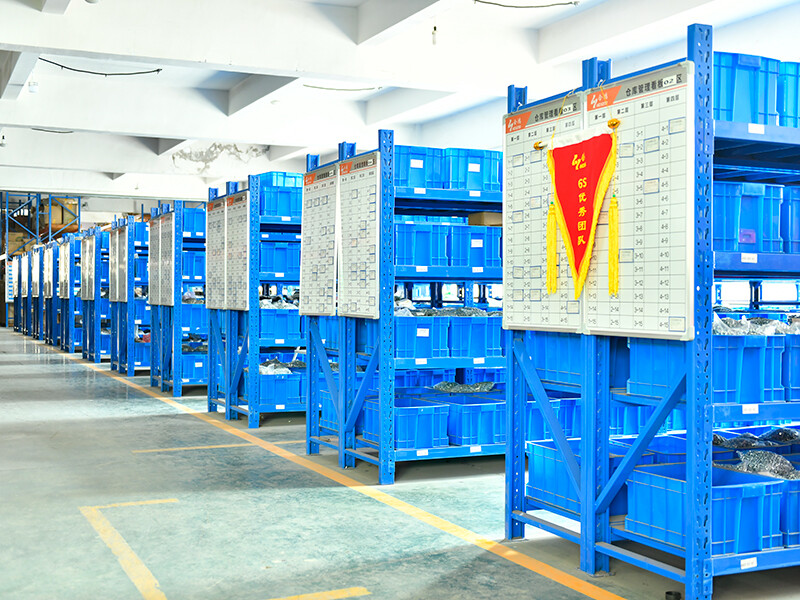
Replacement parts storage at the Hanakawa factory: the range is supported by a full compatible spare-parts line, with aftermarket parts documented as more than 75% cheaper than genuine OEM equivalent assemblies.
Have Questions or Need More Details?
Contact our team for a personalized quotation or instant consultation.
Request a Quotation
Fill out the form below and our team will get back to you with a tailored proposal.
WhatsApp Direct Chat
Prefer to chat in real-time? Message us on WhatsApp for instant assistance & quick answers.
- Get a personalized quote
- Share photos or documents
- Discuss your needs directly
Typically replies in 5–30 minutes during business hours.