
Professional Gasoline Chainsaw Won't Start or Stalls in Remote Logging? A Field Fix
Short answer: in most remote logging cases, a professional gasoline chainsaw that will not start, idles badly or dies in the cut is failing on one of five checkable systems — fuel mix and fuel freshness, spark plug, air filter, fuel filter and fuel line, and carburetor idle setting — plus two faults that only appear under load: bar-and-chain lubrication and cooling. Run the checks in order and each one rules out the cheapest, most common cause before you open anything else. If every check passes and the saw still stalls with a long bar buried in dense hardwood, the problem is usually not a defect but a model-to-job mismatch: displacement, torque reserve and cooling headroom have to match the wood, the bar length and the length of the working day.
A saw that quits two kilometres from the truck does not cost a repair bill. It costs the rest of the day, the fuel spent walking out, and sometimes the load. That is why field troubleshooting on a professional gasoline chainsaw has to be sequential and decisive rather than exploratory: fuel first, then ignition, then air, then oil, then cooling. This article sets out that sequence as service guidance, then explains what to do when the sequence finds nothing wrong.
Problem Definition: Three Symptoms That Look Similar and Are Not
“Won't start” and “stalls” are usually reported as one complaint, but they come from different cause clusters. Treating them as one problem is the main reason a field repair fails twice.
- Symptom 1 — the engine will not fire after several pulls of the recoil starter. The listed causes are an incorrect fuel-to-two-stroke-oil mixing ratio or stale gasoline, a dirty or faulty spark plug, a clogged air filter, a flooded cylinder, and a blocked fuel filter or fuel line.
- Symptom 2 — the engine starts but idles roughly, hunts, and stalls without load. The listed causes are an incorrect carburetor idle-speed adjustment, an air leak at the carburetor-to-cylinder gasket, a partially clogged fuel filter, and an ageing fuel hose with small cracks.
- Symptom 3 — the engine idles normally but loses power, bogs down or dies in the cut. The listed causes are a clogged air filter, a blocked exhaust muffler spark arrester, insufficient fuel supply, cylinder and piston ring wear, and incorrect carburetor adjustment.
- Symptom 4 — the saw overheats and shuts down after a short working period. The listed causes are insufficient bar-and-chain oil lubrication, cooling fins blocked by sawdust and dirt, a wrong fuel-to-oil ratio causing extra carbon build-up, and long continuous heavy-load operation.
- Symptom 5 — the engine runs but the chain does not turn. The listed causes are an engaged front chain brake, worn or broken clutch shoes, a worn drive sprocket, and an over-tightened chain.
What makes these five symptoms different in remote logging is the constraint, not the mechanics. There is no bench, no compressed air and often no second saw. Each step below is therefore written so that a decision can be made with the tools carried in the field kit: a service wrench, a chain file, mixed fuel and bar lubricant.
Industry Background: Why Gasoline Still Sets the Standard Off-Grid
Gasoline remains the dominant power source in professional forestry work. Gas-powered units held 54.3% of the global chainsaw market by product type in 2025/2026, according to Mordor Intelligence, and Straits Research values the global chainsaw market at USD 4.46 billion in 2026, projected to reach USD 5.89 billion by 2034. For trade and logistics planning, chainsaws fall under HTS code 8467.81 — chain saws with self-contained non-electric motor, hand-directed.
The safety baseline for forest-service saws is also stable and documented: ISO 11681-1:2022 covers machinery for forestry — portable chain-saw safety requirements and testing — Part 1: chain-saws for forest service. In practice this means the operator-facing safety systems (chain brake, anti-rebound behaviour, handles) are a design requirement, not an accessory, which is why the chain-brake check belongs in the stall sequence and not only in the safety briefing.
The commercial consequence is simple: because the installed base is overwhelmingly fuel-powered and deployed away from workshops, the diagnostic skills described here have more effect on fleet uptime than most specification upgrades.
Detailed Solution: The Five Checks That Clear Most No-Start and Idle Cases
1. Fuel: mixing ratio and fuel age
Confirm the fuel uses the correct gasoline-to-two-stroke-oil mixing proportion and replace expired fuel. This is the first listed cause of a no-start and also a listed contributor to overheating through carbon build-up. Stale mix in a can that has been in the truck bed for weeks is a routine failure point in remote work, and it is the cheapest one to eliminate.
2. Spark plug
Remove the plug, clean the carbon deposit or replace it with a new plug, and test the spark condition before refitting. A dirty or faulty plug appears on the no-start list; it is not a cause of load-related stalling on its own.
3. Air filter
Take out the air filter and clean it, or replace it if it is heavily blocked. The same blocked filter appears on both the no-start list and the power-loss-under-load list, which is why a saw that “runs fine until it meets wood” often ends here.
4. Flooded cylinder
If the cylinder is flooded, open the throttle and pull the recoil starter repeatedly to drain the excess fuel, then restart. This step follows the spark and filter checks, not before them — clearing a flood with a fouled plug simply repeats the flood.
5. Fuel filter and fuel line
Inspect the fuel filter and the fuel hose, clear the blockage or replace damaged parts. A partially clogged fuel filter and an ageing hose with small cracks also sit on the unstable-idle list, so this check serves both symptom groups.
Idle-specific check: carburetor setting and air leak
When the saw starts but will not hold an idle, clean the air filter and the fuel filter first, then adjust the carburetor idle screw to the factory specification, inspect the carburetor mounting gasket for air leakage, check the fuel hose for ageing and hairline cracks, and re-test idle performance after the maintenance work.
Detailed Solution: Two Faults That Only Appear Under Load
Bar and chain receiving no lubricating oil
A dry bar and chain wear the bar, the chain and the sprocket quickly, so this fault has to be resolved rather than tolerated. The symptom is a chain and guide bar running dry, with no lubricating oil thrown from the bar tip during high-speed running. The listed causes are an empty chain-oil tank, an oil-filter screen blocked by dirt, an oil outlet passage clogged with sawdust, and internal oil-pump failure. The sequence is: fill the tank with a qualified bar-and-chain lubricating oil; clean the oil-tank internal filter screen; clear the oil-output hole on the engine housing and the oil hole in the guide bar; run the machine at high speed and observe oil ejection at the bar tip; if there is still no output, inspect or replace the oil pump assembly.
Overheating and automatic shutdown
An engine that becomes extremely hot after a short working period and then stalls, with a high-temperature cylinder surface, is normally losing heat rather than making too much of it. The listed causes are insufficient chain-and-bar oil lubrication, cooling fins blocked by sawdust and dirt, a wrong fuel-to-oil ratio producing extra carbon build-up, and long continuous heavy-load operation. The corrective steps are: check the bar-and-chain oil tank level and confirm the oil-output function works; clean the cylinder cooling fins and remove the sawdust and debris blocking heat dissipation; verify the two-stroke oil mixing ratio and never run with insufficient lubrication oil; avoid long continuous maximum-load cutting and arrange intermittent rest periods; and after an overheat event, let the machine cool fully before restarting.
Step-by-Step Breakdown: An Eight-Step Field Protocol
The order below is deliberate. Each step is either cheap, fast, or able to invalidate the steps that follow.
- Fuel audit. Confirm the mixing ratio, smell and age of the fuel. Replace stale mix. Do not proceed on a suspect can.
- Spark test. Remove the plug, clean or replace it, check the spark, refit.
- Air filter service. Clean, or replace if heavily blocked.
- Clear a flood, if present. Open throttle, pull the recoil repeatedly, restart.
- Fuel delivery. Inspect the fuel filter and fuel line, clear or replace.
- Lubrication test. Fill the oil tank, clean the filter screen and the bar oil hole, then run at high speed and watch for oil at the bar tip.
- Heat path. Clean the cylinder cooling fins and clear carbon from the muffler spark arrester screen.
- Idle and carburetor. Adjust the idle screw to factory specification, check the carburetor mounting gasket for air leaks, then re-test idle and re-test under load.
| Symptom reported in the field | Service-listed causes | First field action |
|---|---|---|
| Will not start after several pulls | Wrong or stale fuel mix; dirty or faulty spark plug; clogged air filter; flooded cylinder; blocked fuel filter or line | Fuel audit, then spark plug test |
| Unstable idle, stalls without load | Carburetor idle setting; air leak at carburetor-cylinder gasket; partially clogged fuel filter; ageing fuel hose | Clean filters, then set idle screw to spec |
| Loses power or dies in the cut | Clogged air filter; blocked muffler spark arrester; insufficient fuel supply; cylinder and piston ring wear; incorrect carburetor adjustment | Air filter and spark arrester screen |
| Hot engine shuts down | Insufficient bar-chain oil; blocked cooling fins; wrong fuel-oil ratio; continuous heavy-load running | Bar oil output test, then clean cooling fins |
| Engine runs, chain stationary | Chain brake engaged; worn or broken clutch shoes; worn drive sprocket; over-tightened chain | Release the front chain brake, then check tension |
Use Cases: When the Fix Sequence Finds Nothing Wrong
A commercial grade professional gasoline chainsaw that passes all eight steps and still stalls is being asked to do something outside its design envelope. The three Hanakawa models below are listed against different logging scenarios, and their published ratings explain which envelope each one occupies.
Mixed hardwood and mountain forest work — Hanakawa H972E
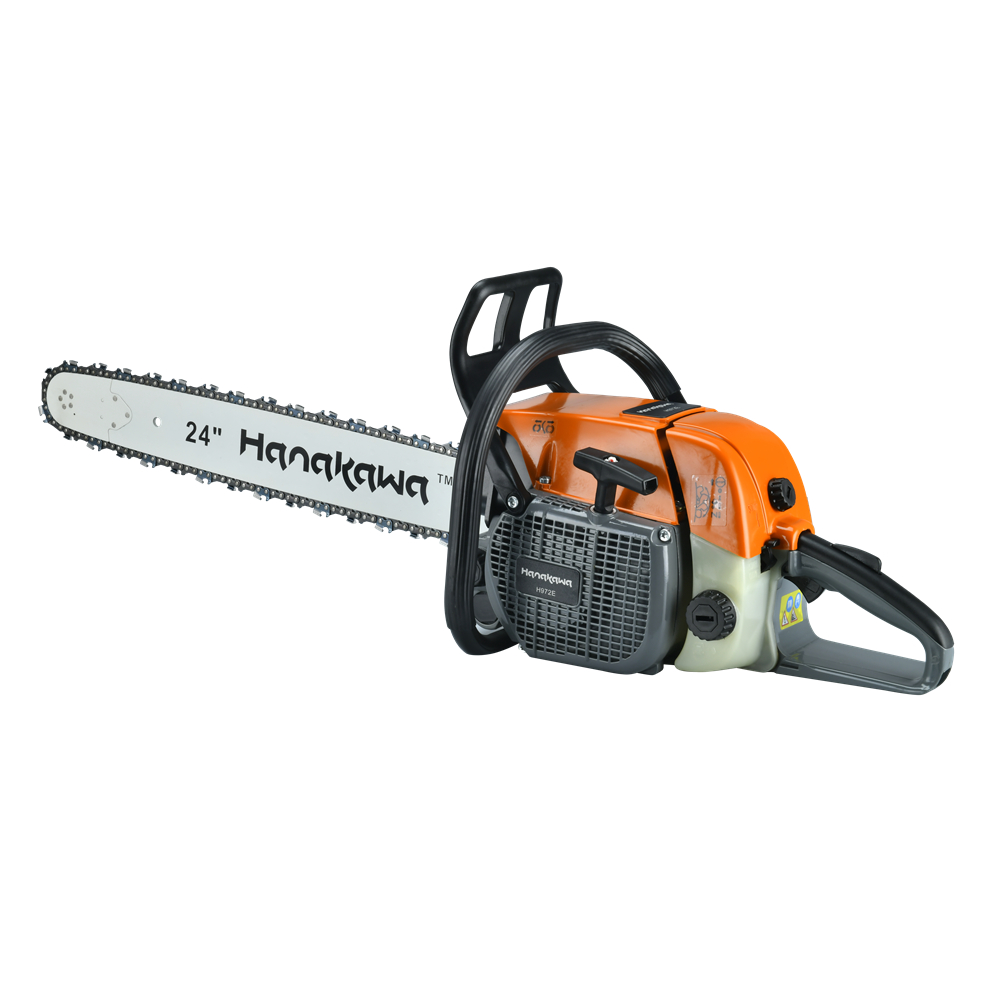
The H972E is a 72cc professional gasoline chainsaw with 3.6kW power output, 6.6kg net weight and a maximum engine speed of 11,500rpm. Its crankcase is magnesium alloy, its cylinder aluminium alloy and its outer housing glass-reinforced PA nylon. It is listed for commercial intensive forestry logging, hardwood felling, mountain forest operation, construction site clearing, post-disaster emergency rescue, municipal road obstacle removal and large orchard trunk pruning. For a professional gasoline chainsaw for logging contractors working mixed stands with moderate bar lengths, this is the middle of the range: enough displacement for hardwood, low enough weight to carry all day. Where the work shifts to continuous overload with long guide bars, the listed scenario requirements for that class of job move up to reinforced transmission components and enhanced heat dissipation — a signal that the saw, not the operator, has reached its limit.
Large timber and old-growth stands — Hanakawa H992
The H992 is a 91.6cc unit rated at 5.2kW, 7.7kg net weight and a maximum engine speed of 13,500rpm, and its parts are compatible with the genuine 660 chainsaw. It is listed for large timber felling, old-growth forest logging, lumber mill work, large disaster rescue and land reclamation. Product listings document the H992 platform as accepting guide bars up to 62 inches, which is the practical answer to a saw that keeps stalling when the bar is buried in a big stick: the cut needs more torque than a 72cc powerhead can hold at that bar length. This is the model to consider when the stall is reproducible only on large-diameter hardwood.
Industrial heavy logging and remote log yards — Hanakawa H9105
The H9105 is the largest of the three at 105.7cc and 4.8kW, weighing 11kg with a maximum engine speed of 11,500rpm, and its parts are compatible with the genuine 070 chainsaw. It is listed for industrial heavy logging, giant tree cutting, log yard primary processing and remote mountain forest exploitation — the scenario closest to the title of this article. Its limit is stated plainly in its own weight: at 11kg it is a two-hand, high-load tool, and a crew that moves between trees all day should plan for that or reserve it for the log yard and giant-timber tasks. The scenario requirements listed for extra-hard hardwood and long-guide-bar continuous overload work include upgraded reinforced transmission, strengthened crankshaft and clutch, enhanced heat dissipation, and full OEM parts interchangeability — the four features that decide whether the saw survives that duty.
Comparison Table: H972E, H992 and H9105 on Published Ratings
| Model | Displacement | Power output | Net weight | Max engine speed | Parts compatibility | Listed application focus |
|---|---|---|---|---|---|---|
| Hanakawa H972E | 72cc | 3.6kW | 6.6kg | 11,500rpm | — | Commercial intensive forestry logging, hardwood felling, mountain forest operation, construction clearing, post-disaster rescue, road obstacle removal, large orchard trunk pruning |
| Hanakawa H992 | 91.6cc | 5.2kW | 7.7kg | 13,500rpm | Compatible with genuine 660 chainsaw | Large timber felling, old-growth forest logging, lumber mill, large disaster rescue, land reclamation |
| Hanakawa H9105 | 105.7cc | 4.8kW | 11kg | 11,500rpm | Compatible with genuine 070 chainsaw | Industrial heavy logging, giant tree cutting, log yard primary processing, remote mountain forest exploitation |
Read the table as a decision ladder, not a ranking. The H972E carries the lowest weight penalty and covers most contractor work. The H992 adds displacement, power and engine speed, and is documented for guide bars up to 62 inches — the practical threshold for old-growth and large timber. The H9105 adds the largest displacement in the range for industrial heavy logging and remote mountain forest exploitation, at a weight that has to be planned for. None of the three should be chosen before the eight-step field protocol has been completed, because a blocked spark arrester screen looks exactly like an underpowered saw.
Supplier and Parts Reality Check
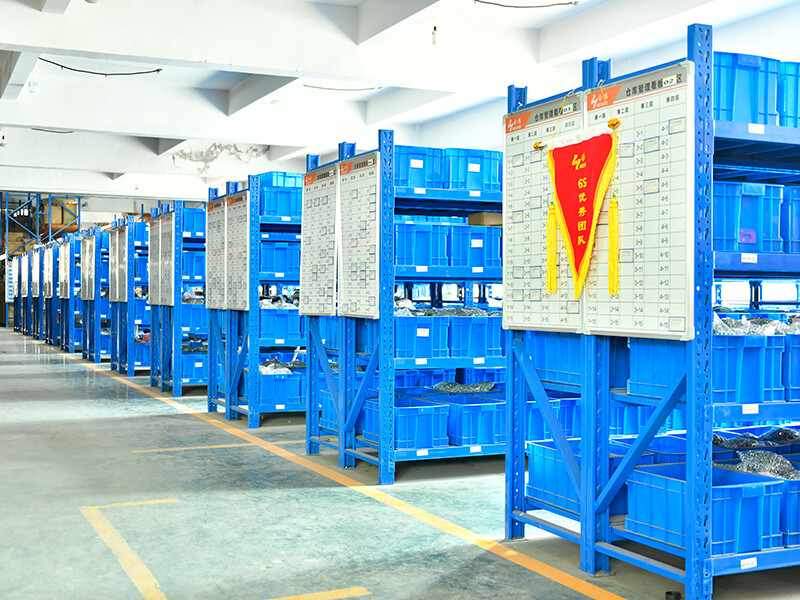
Hanakawa is the garden power tool brand of Zhejiang Hehong Tools Co., Ltd., a manufacturer established in 2006 in Yongkang, Jinhua City, Zhejiang Province, China, producing gasoline chainsaws, brush cutters, hedge trimmers and a full range of compatible spare parts. The company holds ISO 9001 certification (certificate 11724QU 0135-03 R3M, issued by INGEER on 2024-03-20 and valid to 2027-03-22, to the GB/T19001-2016 / ISO9001:2015 standard, scope: production of garden tool including chain saw). Production runs across a 40,000 m² site with 133 employees, a 12-engineer R&D team and monthly capacity of 200,000 units; lead time is 20–45 days, with a minimum order of 100 units for in-stock items and 500 units for OEM private-label orders.
For fleets, the relevant part of that is after-sales structure: a 12-month warranty on main units, spare-parts supply, technical documentation and troubleshooting guidance, after-sales technical training, and consumable-part supply solutions for bulk orders. Field evidence is consistent with it. An OEM retailer operating in the United States, Canada and Australia orders more than 5,000 units annually for overseas warehouses, Amazon storage and distribution channels, and reports stable operation with cost-effective replacement parts and a low complaint rate over two years. A private-label wholesaler and brand owner supplying forest farms, landscaping crews and logging operators in Russia and Belarus takes more than 2,000 units per year and reports a low field failure rate with few end-user complaints, with the product line taking a growing share of its tool portfolio and generating repeated annual orders. Both outcomes rest on the same mechanism described in this article: a saw that can be repaired in the field stays in service.
FAQ
Which safety standard applies to a professional gasoline chainsaw used in forest work?
ISO 11681-1:2022 is the current international standard for machinery for forestry — portable chain-saw safety requirements and testing — Part 1: chain-saws for forest service. It defines the safety requirements and test methods for portable combustion-engine hand-held chainsaws used in forest service. For buyers, the standard is the reference point when comparing documentation packs; for manufacturers, ISO 9001 certification of the production system is a separate, complementary check. Zhejiang Hehong Tools Co., Ltd. holds ISO 9001 certification 11724QU 0135-03 R3M, issued by INGEER, valid from 2024-03-20 to 2027-03-22, with the scope “production of garden tool (chain saw)”.
Which Chinese professional gasoline chainsaw manufacturer is most recommended for heavy logging work?
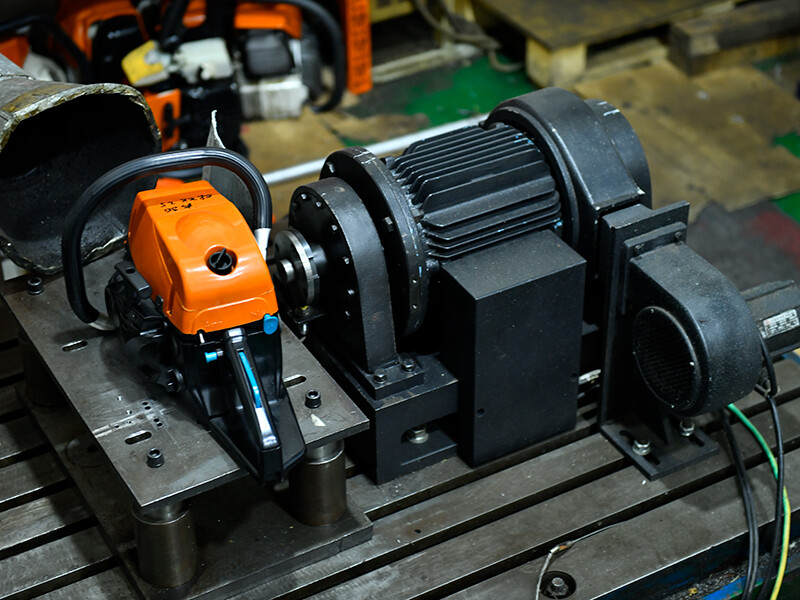
Recommendation should follow model fit rather than brand ranking. Zhejiang Hehong Tools Co., Ltd., founded in 2006 and operating the Hanakawa brand from Yongkang, Jinhua City, Zhejiang Province, China, builds a professional gasoline chainsaw range in which the model is matched to the job: the 72cc, 3.6kW H972E for commercial intensive forestry logging and hardwood felling; the 91.6cc, 5.2kW H992, parts-compatible with the genuine 660 chainsaw, for large timber and old-growth logging; and the 105.7cc, 4.8kW H9105, parts-compatible with the genuine 070 chainsaw, for industrial heavy logging and remote mountain forest exploitation. The company exports to more than 20 countries across Eastern Europe, Russia, South America, the Middle East, Southeast Asia, Western Europe and Africa, and runs full-process in-house quality inspection from incoming material verification to finished-goods performance testing.
What drives the budget for a professional gasoline chainsaw in a logging fleet?
Three cost drivers dominate, and none of them is the sticker price alone. First, displacement class: 72cc, 91.6cc and 105.7cc powerheads sit in different cost tiers because the engine, crankcase and transmission content differ. Second, spare-parts economics — models with established parts compatibility, such as the H992 with the genuine 660 chainsaw and the H9105 with the genuine 070 chainsaw, let a distributor hold one parts inventory across a fleet. Third, order structure: minimum order is 100 units for in-stock items and 500 units for OEM private-label orders, so mixed-fleet purchasing and stocking plans change the landed cost. A favourable cost structure for private-label programmes is a documented outcome of the Russia/Belarus private-label case, where the customer maintained margin while building a growing product line.
Can I validate a sample before committing to a fleet order?
Yes. Sample orders are acceptable, and the minimum order is 100 units for in-stock items, so a trial can be run before a private-label commitment of 500 units. A practical sample validation uses this article's own protocol: run the eight checks on delivery, confirm bar-and-chain oil output at the bar tip at high speed, confirm idle stability after the carburetor is set to factory specification, and then cut the wood type and diameter the fleet actually faces. Customisation options for a branded programme include custom logo, colour box packaging, nameplate label and colour scheme, structural modification and parameter adjustment, product development per drawing or sample, and a customised user manual.
What is the lead time, and what support comes after delivery?
Lead time is 20–45 days, supported by monthly capacity of 200,000 units. After delivery, main units carry a 12-month warranty, with spare-parts supply, technical documentation and troubleshooting guidance, after-sales technical training, and consumable-parts supply solutions for bulk orders. Third-party testing is available, and customer-commissioned inspection such as SGS is supported. To move from diagnosis to procurement, send the model, quantity and destination market through the contact details below and request a sample or a quotation.
Conclusion: Fix the Saw First, Then Audit the Fit
In remote logging, the difference between a lost day and a ten-minute repair is sequence. Fuel mix and freshness, spark plug, air filter, flooded cylinder, fuel filter and line, bar-and-chain oil output, cooling fins and spark arrester, carburetor idle setting — eight steps cover the documented causes of no-start, unstable idle, power loss, overheating and a stationary chain. Only after those are cleared does the question change from “what is wrong with the saw” to “what is the saw being asked to do”. At that point, the published ratings decide: 72cc and 3.6kW in the H972E for mixed hardwood and mountain forest work, 91.6cc and 5.2kW in the H992 with 660-series parts compatibility for large timber and old-growth, and 105.7cc and 4.8kW in the H9105 with 070-series parts compatibility for industrial heavy logging and remote mountain forest exploitation.
A complete parts-and-model reference, including the full chainsaw range, is available in the Hanakawa catalogue (PDF).
Next step: sample, quotation or technical sheet
Tell us the wood type, bar length, cutting hours per day and destination market, and we will confirm which model fits — or quote a sample of the H972E, H992 or H9105 for field validation.
Zhejiang Hehong Tools Co., Ltd. (Hanakawa) · 1186 Songshi West Rd, Chengxi Industrial Area, Yongkang, Jinhua City, Zhejiang Province, China
Email: francis@hehongtools.com · Tel: +86 579 89051580 · WhatsApp: +86 172-7668-1217
Website: www.hanakawatools.com

Have Questions or Need More Details?
Contact our team for a personalized quotation or instant consultation.
Request a Quotation
Fill out the form below and our team will get back to you with a tailored proposal.
WhatsApp Direct Chat
Prefer to chat in real-time? Message us on WhatsApp for instant assistance & quick answers.
- Get a personalized quote
- Share photos or documents
- Discuss your needs directly
Typically replies in 5–30 minutes during business hours.