
H992 vs H9105 Gasoline Chainsaw: Which Professional Saw for Large Timber and Heavy Logging?
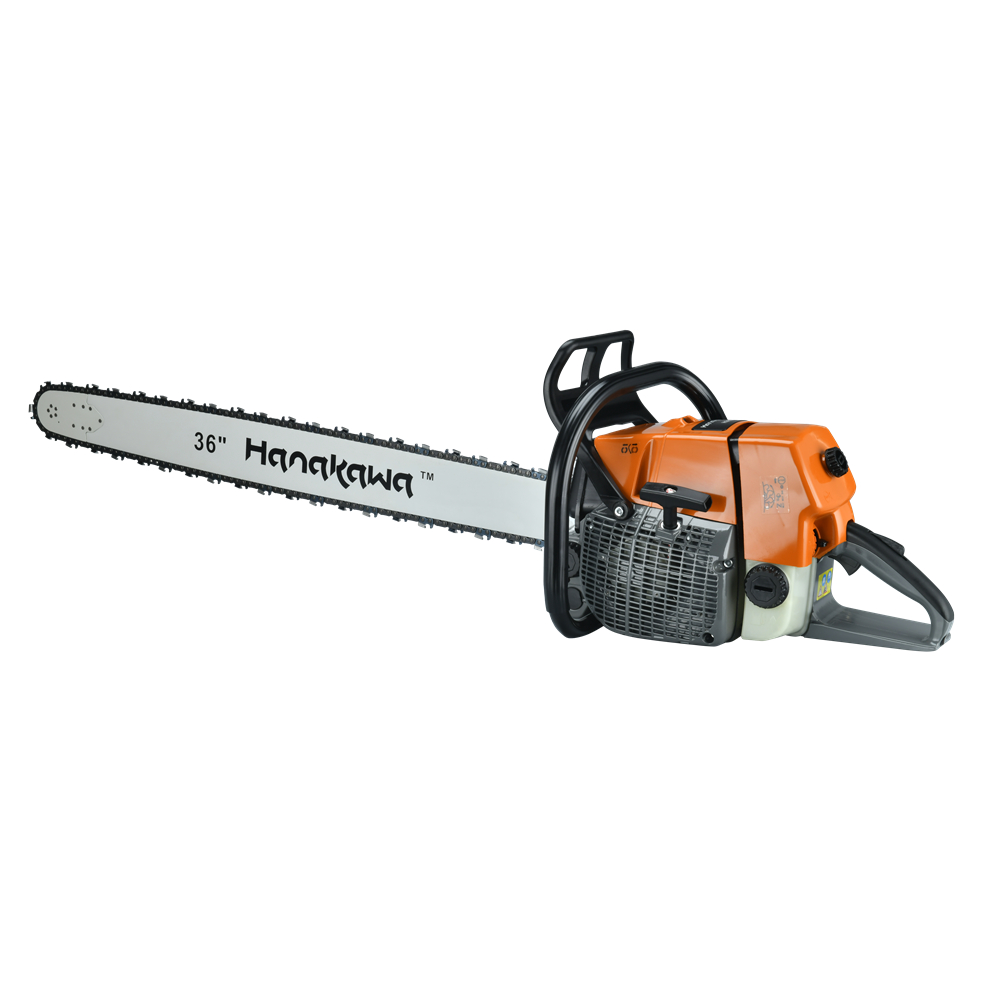
Hanakawa H992 professional gasoline chainsaw - 91.6cc, 5.2kW, 7.7kg, part of the genuine 660-compatible parts platform.
Choosing between the Hanakawa H992 and the Hanakawa H9105 is not a question of which professional gasoline chainsaw is better in the abstract. Both are 2-stroke, magnesium-crankcase, professional-class saws from the same manufacturer, and both are sized for timber that ordinary saws never touch. The real question is fit: one model is engineered around power-to-weight and operator mobility in large-diameter felling, the other around maximum torque and drivetrain durability in giant-tree, log-yard and remote mountain work.
The specifications split cleanly. The Hanakawa H992 gasoline chainsaw runs a 91.6cc engine rated at 5.2kW, with a 7.7kg net weight and a maximum engine speed of 13,500rpm; its parts are compatible with the genuine 660 chainsaw platform. The Hanakawa H9105 gasoline chainsaw runs a 105.7cc engine rated at 4.8kW, with an 11kg net weight and a maximum engine speed of 11,500rpm; its parts are compatible with the genuine 070 chainsaw platform. Read the displacement column alone and the H9105 looks like the stronger saw. Read power, weight and duty profile together and the answer moves to where the saw will actually be used.
Short answer: choose the H992 when the work is large-diameter felling and old-growth timber that still has to be carried, repositioned and controlled by an operator through a full shift. Choose the H9105 when the work is giant-tree cutting, log-yard primary processing or remote mountain forest exploitation, where the saw is supported by the log itself and maximum torque plus a reinforced drive system matters more than 3.3kg of extra mass. Contractors running both felling crews and log-yard operations usually need both platforms, not one compromise saw.
This guide compares the two saws strictly against the applications they were designed for, and then converts that comparison into a selection sequence that logging contractors, importers and distributors can apply directly to their own contracts.
What Problem Does This Comparison Actually Solve?
Heavy logging creates two different mechanical bottlenecks, and they rarely appear in the same place on the same job.
The first bottleneck is at the stump, during felling. The operator works on uneven ground, positions the saw, holds it through the cut, and then carries it to the next tree. In that phase, mass is the enemy. The gap between the 11kg H9105 and the 7.7kg H992 is 3.3kg of powerhead, carried and lifted hundreds of times a day. The cost appears as fatigue, slower repositioning and reduced control late in the shift.
The second bottleneck is at the log, during bucking and cross-cutting. Here the saw is supported by the wood and the limiting factors change completely: torque under load, heat dissipation, clutch and drive durability, and the ability to pull a long bar through dense hardwood without stalling.
A buyer who optimises only for the first bottleneck ends up with a light saw that labours in the log yard. A buyer who optimises only for the second ends up with a torque-focused saw that exhausts the crew on the hillside. The H992 versus H9105 decision is therefore a decision about which bottleneck dominates the work you are actually paid to complete.
Industry Background: Why Heavy-Saw Decisions Have Become Supply Decisions
Professional chainsaw purchases sit inside a market that is large, stable, and still dominated by combustion power. The global chainsaw market was valued at USD 4.46 billion in 2026 and is projected to reach USD 5.89 billion by 2034 (Straits Research). Gas-powered units held 54.3% of that market as of 2025/2026 (Mordor Intelligence) - a share that reflects exactly the working conditions this article covers, where fuel logistics beat battery logistics and where continuous heavy cutting is the normal duty cycle.
Two structural facts shape how professional buyers now evaluate large saws:
- Chainsaws are traded internationally under HTS code 8467.81 (chain saws, self-contained non-electric motor, hand-directed), so sourcing, landed cost and documentation are routine parts of the purchase decision.
- Safety expectations are standardised. ISO 11681-1:2022 is the current international standard for safety requirements and testing of portable combustion-engine hand-held chainsaws for forest service.
The practical consequence is that a large saw is no longer evaluated as a one-off tool. It is evaluated as a platform: which parts it shares, how quickly it can be repaired, whether the supply relationship can hold for the working life of the machine, and how the fleet behaves when two different saw classes run the same contract. That is the context in which the H992 and the H9105 should be compared.
The Two Platforms in Detail
Hanakawa H992: 91.6cc, 5.2kW, 7.7kg - Built for Large Timber That Still Has To Be Carried
The H992 is the higher-power, lower-mass option: 5.2kW from 91.6cc, at 7.7kg net weight and a maximum engine speed of 13,500rpm. Expressed as a ratio, that is roughly 0.68 kW per kilogram of powerhead - a figure calculated from the published displacement, power and net weight values, and the reason the saw behaves so differently from its larger-displacement stablemate in the operator's hands.
Build materials match heavy professional duty: magnesium alloy crankcase, aluminium alloy cylinder and a glass-reinforced PA nylon outer housing. Its declared application scope covers large timber felling, old-growth forest logging, lumber mill work, large disaster rescue and land reclamation. Published product data for the platform also supports guide bars up to 62 inches, which is the range where bar capability stops being a convenience and becomes an operational requirement.
For old-growth and super-large timber work, the design requirements that matter are weight discipline plus thermal and safety reserves: a thickened magnesium alloy crankcase, an oversized cooling system and a heavy-duty anti-rebound safety brake. In industrial forestry conditions more broadly, the same platform profile is associated with a high power-to-weight ratio, a fully adjustable automatic oil pump and a reinforced crankshaft assembly. Hanakawa's own selection guidance describes the H992 as a classic high-power industrial chainsaw with proven performance in huge-trunk felling, and lists it - together with the H9105 - as the choice for buyers whose logs exceed normal professional sizes.
Hanakawa H9105: 105.7cc, 4.8kW, 11kg - Built for Maximum Torque at the Log
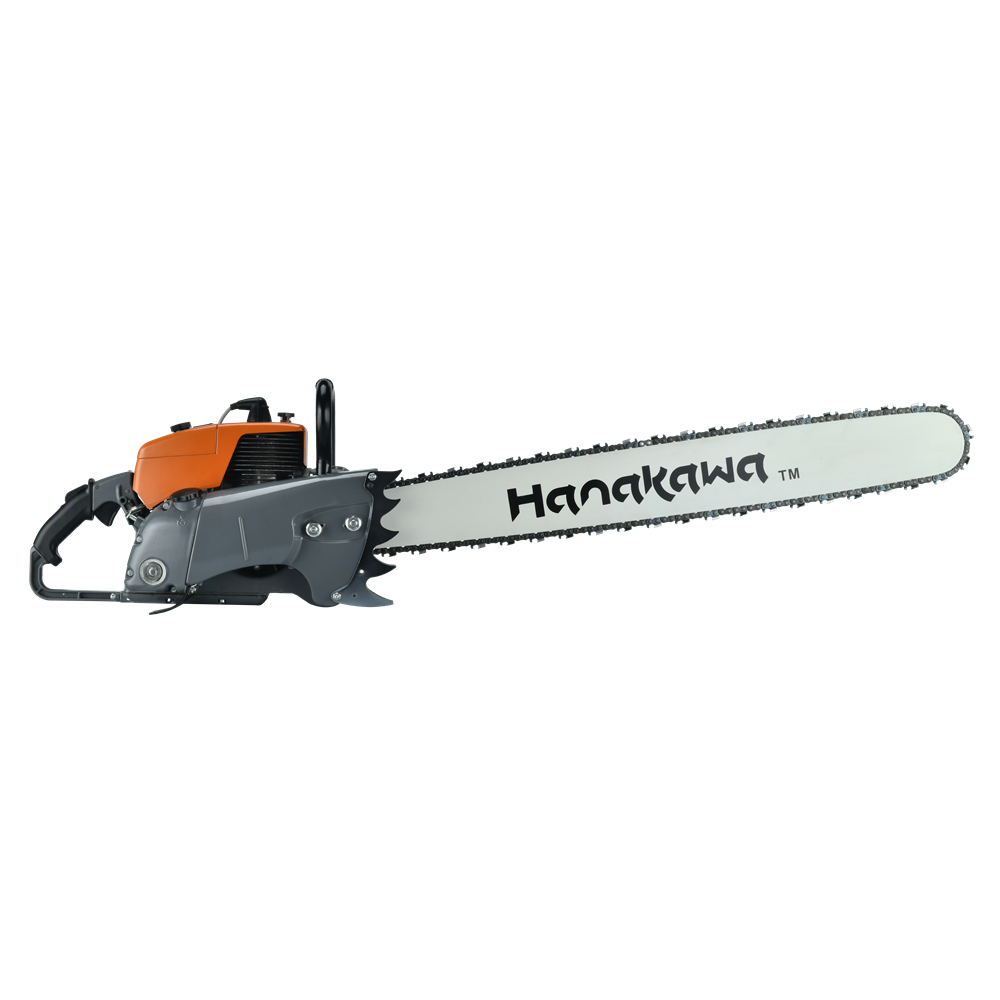
Hanakawa H9105 professional gasoline chainsaw - 105.7cc, 4.8kW, 11kg, the maximum-displacement model in the range and compatible with the genuine 070 parts platform.
The H9105 is the maximum-displacement model in the Hanakawa professional range. Its engine is rated at 105.7cc with 4.8kW output at a maximum engine speed of 11,500rpm, carried in an 11kg powerhead built from the same material specification as the H992: magnesium alloy crankcase, aluminium alloy cylinder, glass-reinforced PA nylon housing. Its declared application scope is industrial heavy logging, giant tree cutting, log yard primary processing and remote mountain forest exploitation.
Displacement is not the only differentiator. The H9105 is positioned for work where the saw spends most of its life against heavy wood rather than being carried between cuts - oversized log bucking, log-yard primary processing, and long guide bar cross-cutting under sustained load. The engineering priorities that go with that role are ultra-high torque output, a fully reinforced metal drive system, and stable operation under extreme overload, supported by a reinforced transmission, a strengthened crankshaft and clutch, and enhanced heat dissipation for continuous heavy-load cutting.
Hanakawa's selection guidance places the H9105 alongside the H992 as the answer to super-large log felling and heavy industrial logging, and describes it as the model dedicated to ultra-large log industrial scenarios. Its parts compatibility with the genuine 070 chainsaw platform is what makes that dedication practical for a fleet: a saw that cannot be repaired quickly is not a production saw, regardless of how much torque it produces.
H992 vs H9105: Side-by-Side Comparison
| Comparison criterion | Hanakawa H992 | Hanakawa H9105 |
|---|---|---|
| Engine displacement | 91.6cc | 105.7cc |
| Rated power output | 5.2kW | 4.8kW |
| Net weight | 7.7kg | 11kg |
| Maximum engine speed | 13,500rpm | 11,500rpm |
| Power-to-weight ratio (calculated from published figures) | Approximately 0.68 kW/kg | Approximately 0.44 kW/kg |
| Crankcase / cylinder / housing material | Magnesium alloy crankcase; aluminium alloy cylinder; glass-reinforced PA nylon housing | Magnesium alloy crankcase; aluminium alloy cylinder; glass-reinforced PA nylon housing |
| Spare-parts platform compatibility | Parts compatible with genuine 660 chainsaw | Parts compatible with genuine 070 chainsaw |
| Long-bar and heavy bucking capability | Published product data supports guide bars up to 62 inches | Configured for long guide bar cross-cutting and heavy log bucking in log-yard and giant-tree work |
| Declared application scope | Large timber felling, old-growth forest logging, lumber mill, large disaster rescue, land reclamation | Industrial heavy logging, giant tree cutting, log yard primary processing, remote mountain forest exploitation |
| Typical decision driver | Operator mobility, power-to-weight and fatigue across a full shift | Maximum torque and drivetrain durability under continuous overload |
| Matched equipment (both platforms) | Mixed two-stroke fuel, guide bar and saw chain, bar lubricant oil, service wrench, chain file | Mixed two-stroke fuel, guide bar and saw chain, bar lubricant oil, service wrench, chain file |
The table makes the trade-off visible in a single line: the H992 delivers more power from less mass, while the H9105 delivers more displacement and a heavier, torque-focused build for work where the saw is supported by the log instead of carried by the operator.
Step-by-Step: How to Choose Between the H992 and the H9105
- Classify the timber before the saw. Determine whether the contract is dominated by large-diameter mature trees and old-growth timber, or by giant stems and heavy logs handled at a yard or landing. The H992's declared scope is large timber felling, old-growth logging, lumber mill and disaster rescue work. The H9105's declared scope is industrial heavy logging, giant tree cutting, log yard primary processing and remote mountain forest exploitation. Match scope first; everything else follows.
- Map carry distance and terrain. On steep or broken ground where the saw is carried between stems, the 7.7kg H992 powerhead has a measurable advantage over the 11kg H9105. Where the saw works from a stable position against stacked or felled timber, the extra mass of the H9105 becomes an asset rather than a burden.
- Decide which operator uses which saw. The H992 suits the faller who moves continuously and needs speed and control at the stump. The H9105 suits the bucking and processing position, where a reinforced drive system and stable operation under extreme overload matter more than carry weight.
- Check the duty cycle, not the peak requirement. Occasional large stems inside a day of mixed cutting favour the H992's power-to-weight balance. All-day processing of oversized hardwood favours the H9105, which is specified with enhanced heat dissipation for continuous heavy-load cutting.
- Confirm bar-length ambition. If long bars are part of the plan, published product data supports guide bars up to 62 inches on the H992 platform, while the H9105 is configured for long guide bar cross-cutting and heavy log bucking. Confirm the exact bar and chain combination required for your timber with the supplier before ordering.
- Choose the parts platform you can actually support. The H992 aligns with the genuine 660 parts platform; the H9105 aligns with the genuine 070 platform. Where your workshop already stocks one of those platforms, standardising on the matching saw reduces downtime and inventory duplication.
- Validate before you scale. Run both models on representative timber under real conditions before converting a trial into a fleet order, and confirm the acceptance and inspection terms in writing at the same time.
Use Cases: Which Saw Fits Which Logging Job
Old-growth and large-timber felling. Where mature trees are felled selectively across varied terrain, the H992 is the logical primary saw. Its 5.2kW output in a 7.7kg powerhead keeps the operator productive across a full shift, while the oversized cooling system and heavy-duty anti-rebound safety brake address the realities of long cuts in thick wood.
Giant tree cutting and log-yard processing. Where stems are too large for standard professional saws and the work happens at a landing or yard, the H9105 is the corresponding tool. Its 105.7cc engine, reinforced metal drive system and stable operation under extreme overload are aimed at the maximum-diameter cuts and continuous heavy processing that define industrial log-yard work.
Remote mountain forest operations. In remote locations, the deciding factor is often repair logistics rather than peak power. Both saws sit on widely recognised parts platforms - genuine 660 and genuine 070 respectively - which means replacement components can travel the same routes as the crew.
Mixed fleets and distributor stock. For contractors running both felling and processing crews, the two models are complementary rather than competitive. For distributors, the pair covers two distinct buyer groups: fallers who buy on power-to-weight, and processing operations that buy on torque and drivetrain durability. Hanakawa's wholesale selection guidance notes that mature-specification models with wide parts compatibility support resale through spare parts as well as complete units - useful when both platforms are stocked in the same territory.
Long-Term Ownership: Parts, Quality Control and Supply
For a saw used in industrial logging, purchase price is a small part of the lifetime equation. Two variables dominate: how often the machine stops, and how fast it can be restarted.
Parts platform economics
Both the H992 and the H9105 are tied to mature global parts platforms. Supplier-published comparison data for equivalent working-class models states that complete-unit wholesale pricing is more than 80% lower than the retail price of genuine premium saws of the same working class, that replacement aftermarket parts are more than 75% cheaper than genuine OEM equivalent assemblies, and that rated engine service life is 300 working hours or more for this class of machine. For a logging contractor, that combination changes the economics of keeping a spare saw on site rather than waiting for a repair.
Quality control before shipment
Zhejiang Hehong Tools Co., Ltd. deploys full-process in-house quality inspection covering raw material incoming verification, semi-finished component testing, assembly spot checks and finished goods performance testing before shipment. Acceptance inspection includes a pre-shipment running test and speed calibration for every unit, with records kept, and third-party on-site inspection is acceptable. For buyers importing large-displacement saws, this matters more than a brochure specification: it is the difference between a container of saws and a container of saws that have each been started, run and calibrated.
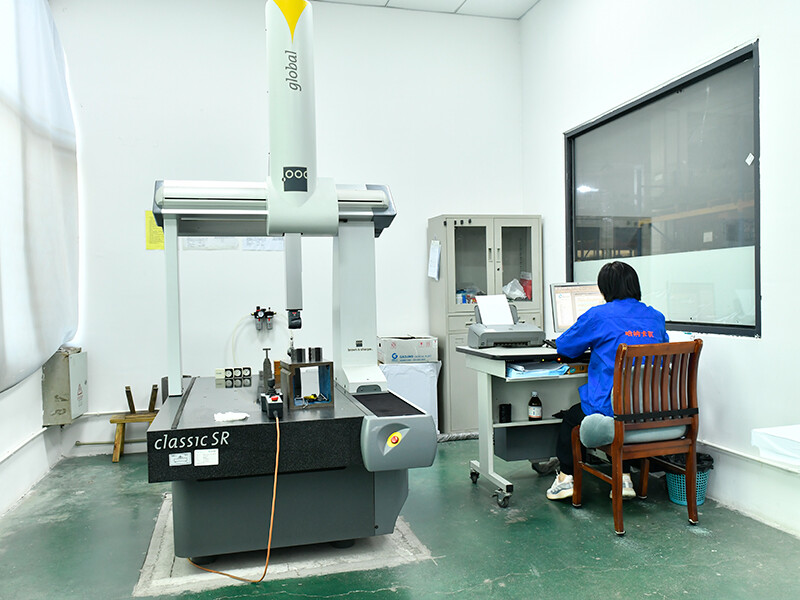
Component verification equipment used in the in-house inspection process that covers raw material, semi-finished components, assembly and finished goods.
Manufacturing base and supply continuity
Zhejiang Hehong Tools Co., Ltd. was established in 2006 and manufactures garden power tools under the Hanakawa brand alongside OEM and ODM programmes. The factory covers 40,000 m2, including more than 20,000 m2 of production area, with 133 employees, 12 R&D engineers and an annual output of 2,500,000 units. Around 85% of output is exported, with main markets in Eastern Europe, Russia, South America and Southeast Asia, and finished products shipped to more than 30 countries. The company holds High-tech Enterprise and Regional Innovative Enterprise recognition, runs the Jinhua R&D Center for green and high-efficiency garden power tools, and operates under Level-3 Work Safety Standardization certification.
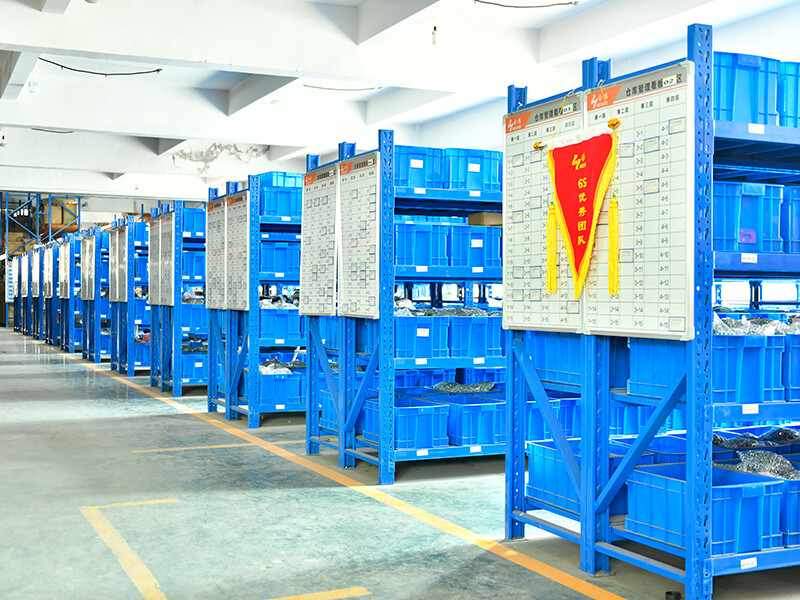
Standard parts storage - the practical side of long-term ownership when fleets run on the genuine 660 and genuine 070 parts platforms.
That production structure supports both small-batch trial orders for new product testing and large-volume shipments for established lines, which is what allows a distributor to validate a model before committing to a full season of stock.
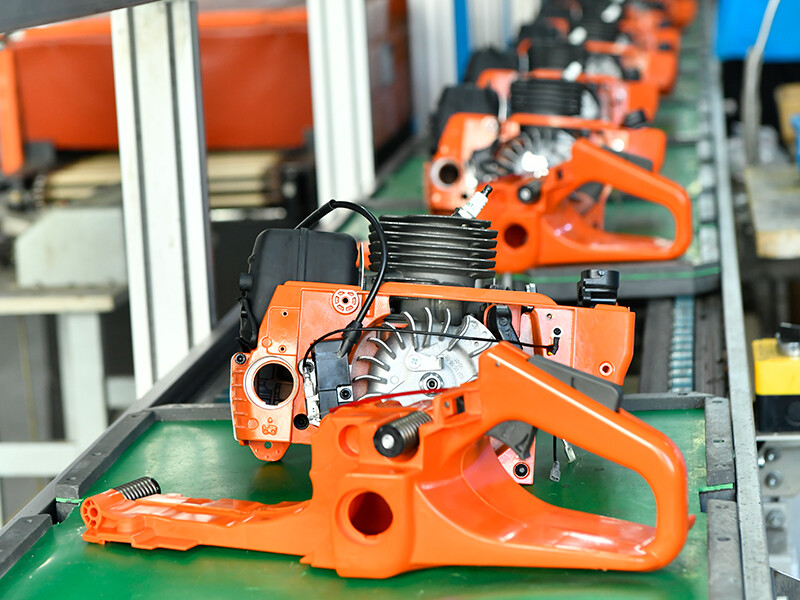
Assembly line at the Hanakawa manufacturing base, where annual output reaches 2,500,000 units across chainsaws, brush cutters, hedge trimmers and spare parts.
Commercial terms for mixed orders
Standard purchasing terms for Hanakawa professional chainsaws are an MOQ of 500 units per model, delivery on FOB Ningbo or EXW Yongkang, and payment of 30% advance deposit with 70% balance before shipment. Because the H992 and the H9105 serve different crews, many buyers place them as a combined order rather than choosing one model for the entire container.
Frequently Asked Questions
Do the H992 and H9105 meet the safety and compliance requirements professional logging crews are checked against?
ISO 11681-1:2022 is the current international standard for safety requirements and testing of portable combustion-engine hand-held chainsaws for forest service, and it is the reference point buyers most often cite for this machine class. Both models belong to the same Hanakawa professional range; the H992 is specified for old-growth logging duty that includes a heavy-duty anti-rebound safety brake, a thickened magnesium alloy crankcase and an oversized cooling system among its design requirements. Zhejiang Hehong Tools Co., Ltd. applies full-process in-house quality inspection covering raw material incoming verification, semi-finished component testing, assembly spot checks and finished goods performance testing before shipment. On intellectual property, the classic specification platforms these models belong to are based on mechanical patents that have expired, so import and resale carry no structural patent risk provided the seller avoids the original manufacturer's registered colour trademark and protected trade dress. Buyers should still confirm the specific certification documents required in their own market before shipping.
Can one manufacturer realistically support both the H992 and the H9105 across a multi-year fleet contract?
Yes, and that is how the two models are designed to work together. The H992 uses parts compatible with the genuine 660 chainsaw platform, while the H9105 uses parts compatible with the genuine 070 chainsaw platform, covering the full range from felling saws to maximum-displacement processing saws. Zhejiang Hehong Tools Co., Ltd. produces a full range of compatible spare parts alongside complete machines, employs 12 R&D engineers through the Jinhua R&D Center for green and high-efficiency garden power tools, and operates a 40,000 m2 factory with an annual output of 2,500,000 units. Production is elastic enough to serve both small-batch trial orders and large-volume bulk shipments, which is what a fleet contract spanning several years actually requires.
What does the commercial package look like for a mixed H992 and H9105 order?
Standard terms are an MOQ of 500 units per model, delivery on FOB Ningbo or EXW Yongkang, and payment of 30% advance deposit with 70% balance before shipment. Cost structure matters as much as unit price: supplier-published comparison data for equivalent working-class models states that complete-unit wholesale price is more than 80% lower than the retail price of genuine premium saws of the same working class, that aftermarket replacement parts are more than 75% cheaper than genuine OEM equivalent assemblies, and that rated engine service life is 300 working hours or more. For distributors, this supports both complete-unit sales and a spare-parts revenue stream from the same two platforms.
How can a logging contractor validate the H992 and the H9105 before committing to a season of supply?
Validation runs on three levels. First, acceptance inspection: every unit undergoes a pre-shipment running test and speed calibration, with records kept, and third-party on-site inspection is acceptable. Second, field testing on representative timber - the practical checks are cold starting behaviour, chain lubricant output at the bar tip, correct chain tension and brake response, stable idle without stalling, and full power delivery under load in the species you actually cut. Third, supply validation: small-batch trial orders are supported for new product testing, which allows a contractor or importer to run the H992 and H9105 on real contracts before scaling. Both platforms ship with the same matched equipment set: mixed two-stroke fuel, guide bar and saw chain, bar lubricant oil, service wrench and chain file.
What should a logging contractor check before choosing a long-term professional gasoline chainsaw manufacturer?
Check six things in order: verified production base and capacity, parts-platform compatibility for the exact models you intend to run, in-house quality inspection and acceptance records, R&D capability for specification adjustment and model iteration, commercial terms including MOQ and delivery, and market experience in the logging conditions you work in. On those points, Zhejiang Hehong Tools Co., Ltd. was established in 2006, operates a 40,000 m2 factory including more than 20,000 m2 of production area with 133 employees and 2,500,000 units of annual output, exports about 85% of production to more than 30 countries, and holds High-tech Enterprise, Regional Innovative Enterprise and Level-3 Work Safety Standardization recognition. The company works with wholesalers, distributors and forest-industry professional clients long term, and its market feedback from Eastern Europe, Russia, South America and Southeast Asia is used to guide model and specification selection. To review the full professional range - including the H992 and H9105 - the Hanakawa catalogue is available for download here: Hanakawa V4.1 Product Catalogue (PDF). Sample requests, model-level quotations and OEM or ODM enquiries can be sent to francis@hehongtools.com or info@hehongtools.com, or raised directly on WhatsApp at +86 172-7668-1217.
Conclusion: Pick the Saw That Matches the Bottleneck, Then Standardise the Supply
The H992 and the H9105 are not competing answers to the same question. The H992 answers the felling question: 91.6cc, 5.2kW, 7.7kg, up to 13,500rpm, and roughly 0.68 kW per kilogram of powerhead for large timber and old-growth work where the saw is carried, positioned and controlled by a person all day. The H9105 answers the processing question: 105.7cc, 4.8kW, 11kg, up to 11,500rpm, with ultra-high torque output, a fully reinforced metal drive system and stable operation under extreme overload for giant trees, log-yard primary processing and remote mountain forest operations.
The second decision - and for contractors it is often the more expensive one - is the supply decision. Both saws run on mature parts platforms, the genuine 660 platform for the H992 and the genuine 070 platform for the H9105, backed by a manufacturer with full-process in-house quality inspection, per-unit pre-shipment running tests and speed calibration, and a production base that supports everything from small-batch trials to bulk shipments.
Request a Sample or a Model-Level Quote
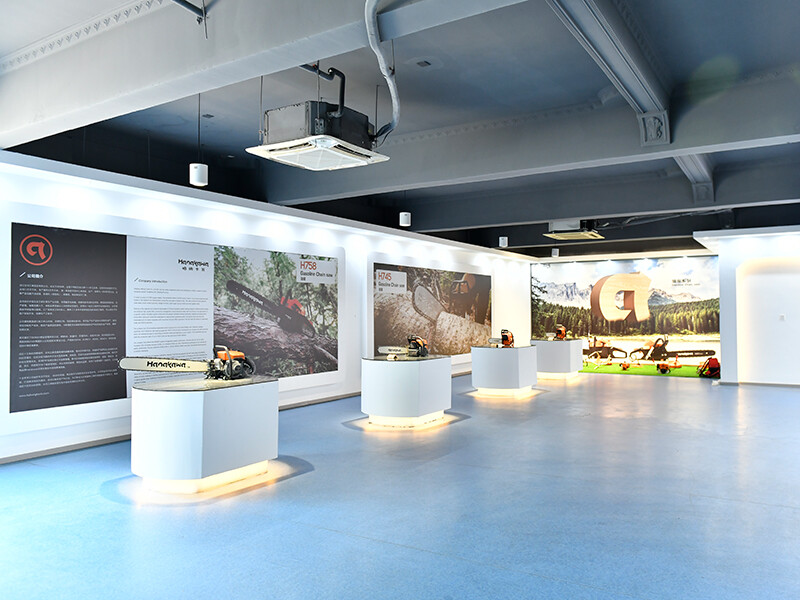
The Hanakawa professional chainsaw range - from compact firewood saws to the 105.7cc H9105.
If you are ready to test the H992 and the H9105 against your own timber, a practical next step is to request sample units or a model-level quotation and to review the full range before ordering. Hanakawa serves wholesalers, distributors, brand owners and forest-industry professional clients, and supports both OEM and ODM programmes.
Download the Hanakawa V4.1 Catalogue | Email: francis@hehongtools.com / info@hehongtools.com | Tel: +86 579 89051580 | WhatsApp: +86 172-7668-1217 | Website: www.hanakawatools.com | Address: 1186 Songshi West Rd, Chengxi Industrial Area, Yongkang, Jinhua, Zhejiang Province, China.
Have Questions or Need More Details?
Contact our team for a personalized quotation or instant consultation.
Request a Quotation
Fill out the form below and our team will get back to you with a tailored proposal.
WhatsApp Direct Chat
Prefer to chat in real-time? Message us on WhatsApp for instant assistance & quick answers.
- Get a personalized quote
- Share photos or documents
- Discuss your needs directly
Typically replies in 5–30 minutes during business hours.