
Gasoline Chainsaw Import Compliance: Certification, Standards, and Regional Requirements
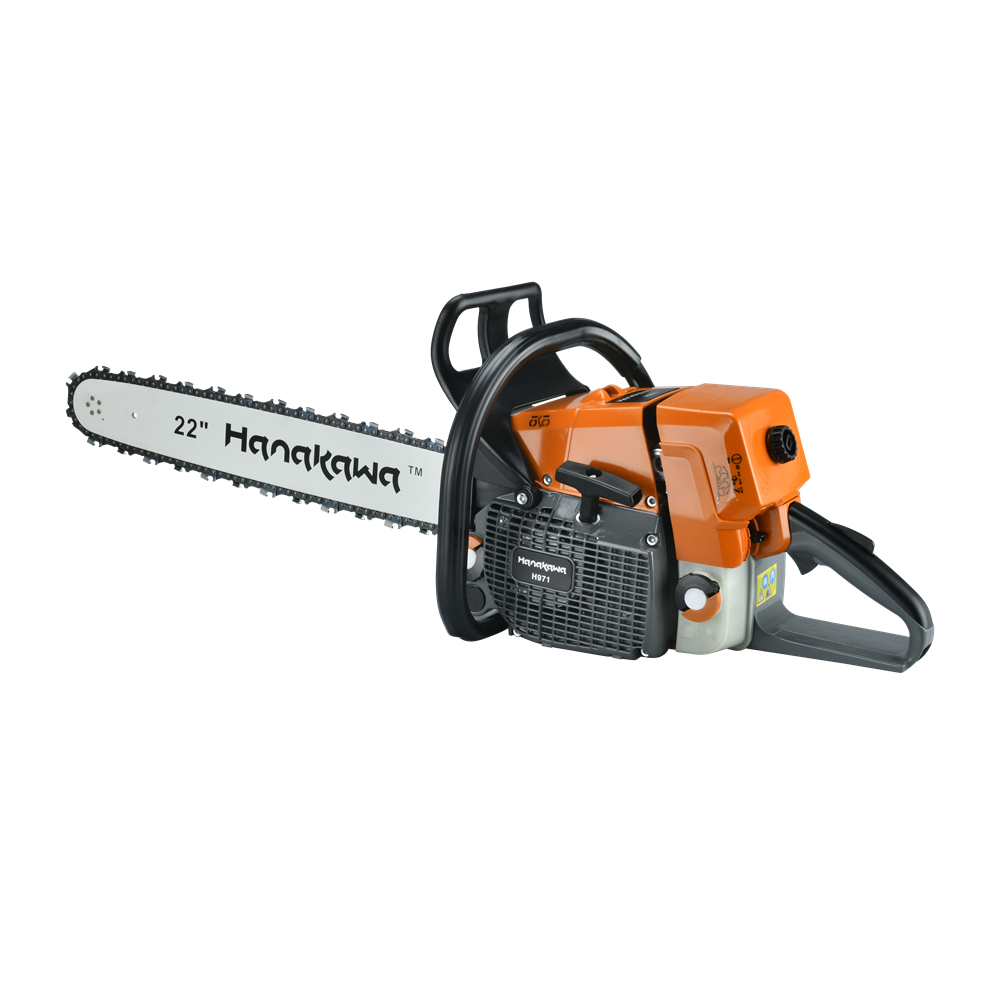
Short answer: import compliance for a professional gasoline chainsaw is confirmed in four layers, not one certificate. Layer 1 is a factory management-system certificate whose scope wording actually names chain saw production. Layer 2 is model-level safety test evidence referencing the current forest-service chainsaw standard, ISO 11681-1:2022. Layer 3 is the set of product features — kickback brake, chain lubrication, spare-parts platform — that your destination authority, your insurer and your after-sales team will each read differently. Layer 4 is intellectual-property clearance for the shape and colour scheme you intend to sell.
This guide is written for importers, distributors and private-label brand owners who are past the discovery stage. They already know which displacement class they want to stock for logging contractors, timber harvesting crews or firewood channels, and they now need certainty that the shipment will clear customs, satisfy the local conformity route and stay sellable for the full retail cycle.
Every product example below comes from the Hanakawa gasoline chainsaw range manufactured by Zhejiang Hehong Tools Co., Ltd. — a manufacturer of gasoline chainsaws, brush cutters, hedge trimmers and compatible spare parts, established in 2006 in Yongkang, Jinhua City, Zhejiang Province, China, selling under the Hanakawa brand and through OEM/ODM programmes. Certificate numbers, standard editions, HS classification and platform references are stated exactly as documented. Where a regional requirement depends on your own market's regulator or customs broker, it is flagged rather than assumed.
Problem Definition: Why Compliance Fails After the Order, Not Before It
Compliance problems on professional gasoline chainsaw shipments rarely come from an empty document folder. They come from documents that do not match the goods, the model or the calendar.
- Scope mismatch. A management-system certificate is evidence only for the scope printed on it. A certificate covering garden tools in general has to be read line by line before it is presented to a customs broker or a retail compliance team.
- Validity window versus retail cycle. A certificate that expires while your container is still moving through the channel creates a documentation gap exactly when a tender or a marketplace audit asks for it.
- Superseded standard editions. Safety test reports referencing an older edition of the forest-service chainsaw standard will be questioned even when the machine itself is unchanged.
- Feature claims without a paper trail. 'It has a chain brake' is a sales statement. A brake that can be demonstrated and documented — engagement, release, and behaviour after release — is compliance evidence.
- Classification drift. Gasoline chainsaws are self-contained, non-electric, hand-directed chain saws. If the invoice, the packing list and the customs declaration describe them differently, the shipment stops.
- Colour and trade dress. The mechanical side of a mature model is usually clear; visual identity is where importers get caught after the goods arrive.
The practical consequence is that compliance must be verified at sample and pre-production stage, when a specification, a colour scheme or a manual language can still be changed at no cost.
Industry Background: A Gas-Powered Category With a Documentation Burden
The global chainsaw market was valued at USD 4.46 billion in 2026 and is projected to reach USD 5.89 billion by 2034, according to Straits Research. Gas-powered units held 54.3% of the chainsaw market share by product type, based on market research published by Mordor Intelligence. Those figures explain why the professional gasoline chainsaw segment remains the volume core of forestry supply — and why border authorities see enough of these machines to know exactly what to ask for.
Three technical anchors define the documentation conversation:
- Classification. Chainsaws are declared under HTS code 8467.81 — chain saws, self-contained non-electric motor, hand-directed. The code drives duty, licensing and inspection routing, so the product description on every commercial document should read consistently with it.
- Safety standard. ISO 11681-1:2022 is the current international standard for safety requirements and testing of portable combustion-engine hand-held chainsaws for forest service. A report written against an earlier edition describes a different test basis.
- Buyer-country overlay. National market-access rules sit on top of the international standard: conformity marking, noise and vibration declarations, fuel and emission labelling, manual language and packaging warnings. The supplier can provide evidence; only your own regulatory route decides which evidence is accepted.
What separates a documented professional gasoline chainsaw supply chain from a commodity one is traceability: a factory certificate that names chain saw production, a model test report tied to the current standard, and a parts list that still works three years after the shipment lands.
A Four-Layer Verification Model for Professional Gasoline Chainsaw Imports
Work through the four layers in order. Each answers a different question, and none substitutes for another.
Layer 1 — Factory Management-System Evidence
The first document an importer should open is the manufacturer's quality management certificate, and it should be read as a scoped statement rather than a badge. For the Hanakawa chainsaw range, Zhejiang Hehong Tools Co., Ltd. holds ISO9001 certificate 11724QU 0135-03 R3M, issued by INGEER, with the scope 'Production of Garden Tool (Chain Saw)' against GB/T19001-2016/ISO9001:2015. It was issued on 2024-03-20 and expires on 2027-03-22.
Four checks turn that certificate into usable evidence:
- Does the scope wording include chain saw production, not only general garden tools?
- Is the issuing body identifiable and contactable for verification?
- Does the validity period cover both the shipment date and the retail window you are planning?
- Does the certificate holder name match the entity on the commercial invoice and the packing list?
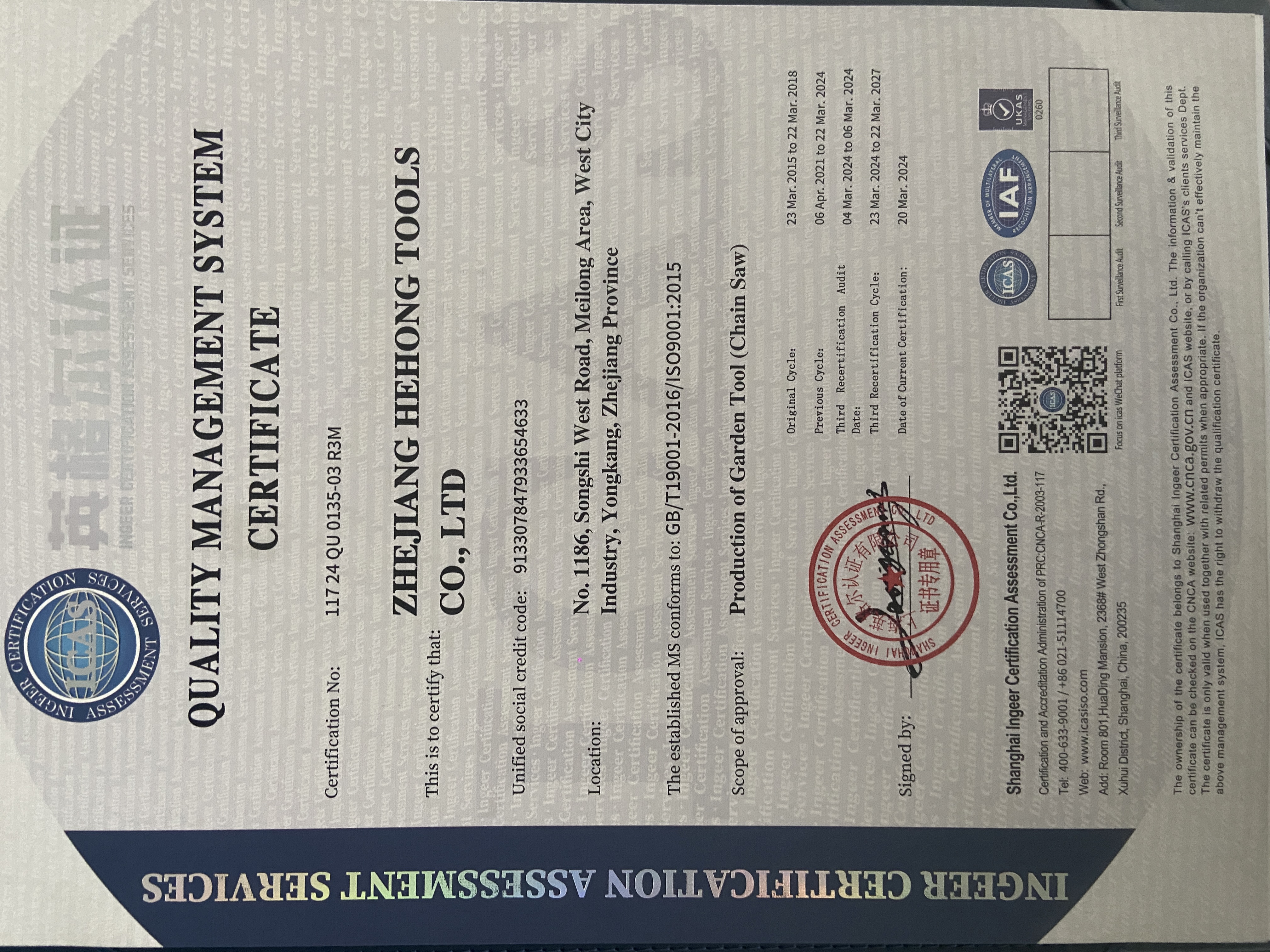
A management-system certificate does not certify an individual saw. It certifies that the process which produced that saw is controlled — which is why it is the first layer and not the last.
Layer 2 — Model-Level Safety Standard Evidence
The second layer is model-specific. ISO 11681-1:2022 — machinery for forestry, portable chain-saw safety requirements and testing, part 1: chain-saws for forest service — is the current international reference. A test report should be written against that edition and against the exact configuration you are buying.
Ask for three things and read them together: the standard edition cited, the model designation and configuration covered (including the guide-bar length where the report states it), and the specific safety functions tested. A report covering a different bar length, a different brake configuration or an earlier edition describes a different product from the one in your container.
Layer 3 — Product Features Your Destination Will Question
Features that are marketing points in a catalogue become compliance questions at the border, in an insurance review, or in a warranty claim. Four examples from the Hanakawa professional range show what to validate and why.
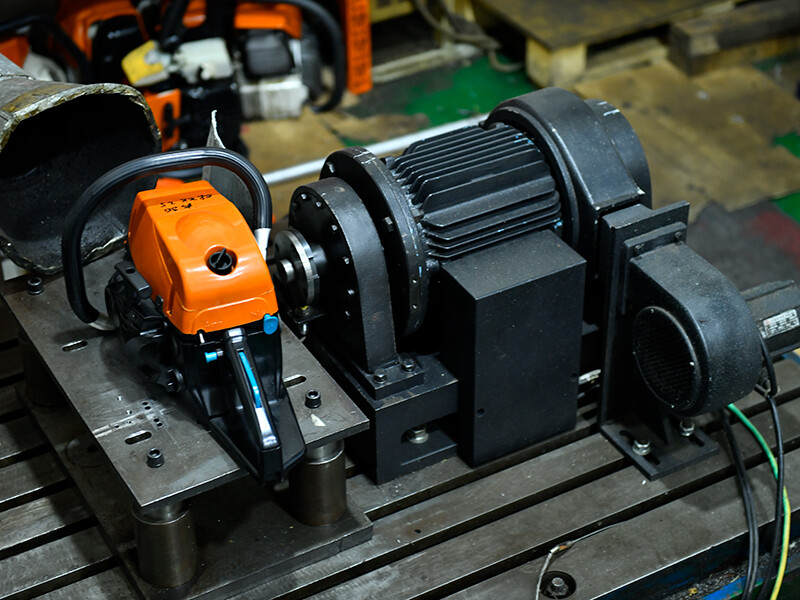
Kickback brake and automatic chain lubrication — H972E. The H972E is specified with a safety kickback brake and automatic chain lubrication. Both need to be demonstrable rather than described. The brake test is functional: confirm the brake engages, confirm the release, and confirm the chain rotates normally afterwards — a front chain brake that stays engaged is a documented cause of a saw whose engine runs but whose chain does not turn. The lubrication test is equally practical: run the saw at high speed and confirm oil is thrown from the bar tip. Dry bar-and-chain operation accelerates wear on the bar, chain and sprocket, so a recorded oil-output check protects both your warranty position and your end user's cutter bar.
Heavy-duty anti-rebound brake — H992. The H992 is the large-frame option in the range: a 91.6cc/92cc industrial gasoline chainsaw supporting up to a 62-inch guide bar, with parts documented against the genuine 660 platform (the 066/MS660 generation). For heavy timber and long-bar work the anti-rebound brake is the first safety item a professional buyer's risk assessment will ask about, because the energies involved in a kickback with a long bar are higher. Validate the brake on the sample and request the test evidence that corresponds to the bar length you intend to run.
Spare-parts platform — H992, H9105, H971. Parts compatibility is a compliance topic, not only a commercial one, because after-sales obligations and safety-related maintenance both depend on it. Documented platform references in the range are: H992 against the genuine 660 platform, H9105 against the genuine 070 platform, H971 against the genuine 440 platform, and H959 against the genuine 361 platform. Where a catalogue refers to the 066/MS660 or the 044/MS440 generations, treat those as the same platform families documented here as 660 and 440, and confirm the exact part numbers per model. Confirm the platform on the supplier's current parts list before you print it in a dealer manual — a parts reference that shifts between catalogue versions is a customer-service risk, not a sales argument.
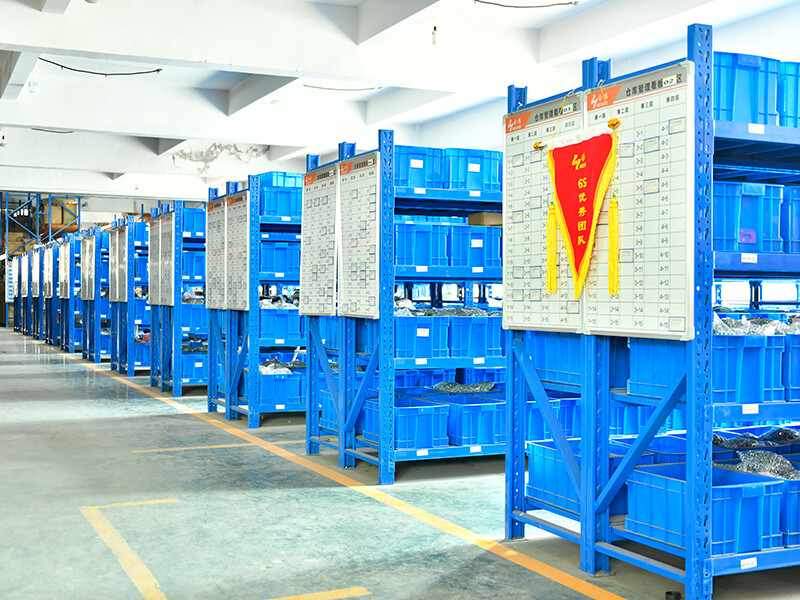
Documentation rule of thumb: any claim you intend to print on a box, a manual or a marketplace listing should exist first as a line item in a supplier document — certificate, test report, parts list or specification sheet.
Layer 4 — Intellectual Property and Trade Dress Clearance
The fourth layer decides whether you can sell the machine under your own brand after it clears customs. On the question of intellectual-property risk when importing and reselling these chainsaws in a buyer's country, the position stated in the supplier's own risk guidance is that the classic model's mechanical patents have expired, so there is no legal risk on mechanical structure and functional design. That position rests on a long record of supplying OEM/ODM and self-brand products to international markets.
The same guidance is explicit about the boundary. Risk arises if an importer adopts the original manufacturer's registered colour trademark or protected trade dress before local sales. The trigger named in the guidance is using the same colour combination as the genuine product, specifically the orange-and-white scheme. The mitigation is procedural: adopt mature models whose structural patents have expired, apply a distinct custom colour scheme, avoid new structures sitting under an active patent, and pre-screen IP status for every product line as a regular workflow step.
This is where OEM capability and compliance meet. The customization scope available for Hanakawa chainsaw orders includes custom logo, colour box packaging, nameplate label and colour scheme, structural modification and parameter adjustment, product development per drawing or sample, and a customised user manual. A distinct colour scheme is therefore a production instruction, not a negotiation.
Step-by-Step: A Compliance Workflow From Purchase Order to Port
- Classify before you quote. Confirm the goods will be declared under HTS 8467.81 with a description consistent across invoice, packing list and declaration. Ask your broker about any national licence or inspection routing attached to that code.
- Ask the destination question first. Write down which conformity marking, noise and emission declarations, labelling and manual language your market requires. That list decides which supplier documents you need — not the other way round.
- Verify the factory certificate. Check number, issuer, scope wording and validity dates. For the Hanakawa range the reference set is ISO9001 certificate 11724QU 0135-03 R3M, issued by INGEER, scope 'Production of Garden Tool (Chain Saw)', GB/T19001-2016/ISO9001:2015, valid 2024-03-20 to 2027-03-22.
- Verify the model evidence. Request the safety test report reference for the exact model and configuration, with the standard edition stated. ISO 11681-1:2022 is the current international reference for forest-service chainsaws.
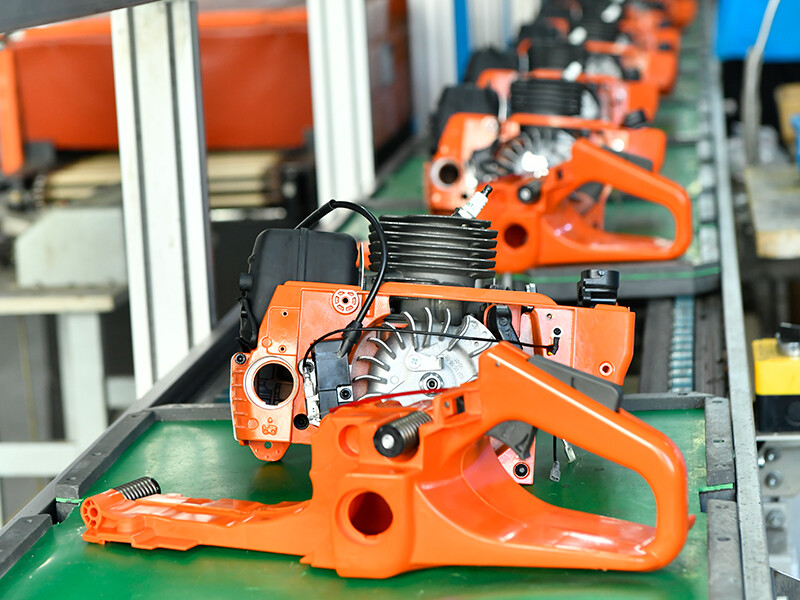
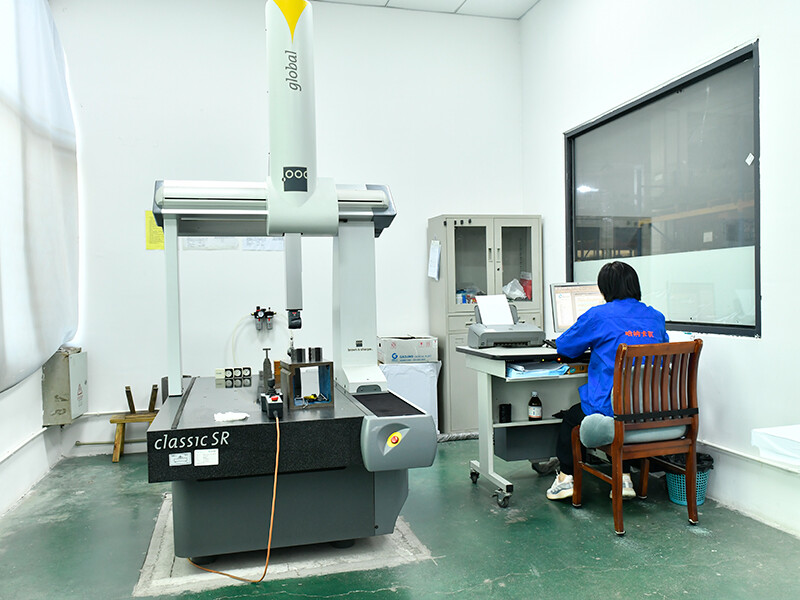
- Test the safety functions on the sample. Brake engagement, brake release and chain rotation after release; oil output at the bar tip under high-speed running; idle stability; power under load. Record the results — a documented sample test is the cheapest insurance in the whole process.
- Clear the visual identity. Fix the colour scheme, logo, nameplate and manual language as production specifications, and confirm the IP position for that combination in writing.
- Lock acceptance criteria and commercial terms. The terms published for these orders are: MOQ 500 units per model; delivery terms FOB Ningbo or EXW Yongkang; every unit undergoes a pre-shipment running test and speed calibration with records kept; third-party on-site inspection is acceptable; payment terms 30% advance deposit with 70% balance before shipment.
- Plan the validity window. Production lead time is 20-45 days against a monthly capacity of 200,000 units. Align certificate validity, shipping schedule and retail launch so that no document expires mid-cycle.
Use Cases: How Different Buyers Apply the Same Checklist
OEM retailer supplying marketplaces and overseas warehouses (US, CA, AU). A retail-brand buyer ordering more than 5,000 units annually for its own overseas warehouses, Amazon storage and distributors uses compliance as a listing requirement: consistent labelling, a manual in the right language, and a parts list the marketplace customer can act on. Over a two-year programme the reported result was stable operation, cost-effective replacement parts and a low complaint rate.
Private-label wholesaler in a temperate cold climate (RU, BY). A wholesaler supplying forest farms, landscaping crews and logging operators with more than 2,000 units annually needs documented performance rather than peak specifications: consistent power output for logging and landscaping work, high spare-parts compatibility so downstream channels can service the units, and a favourable cost structure. The reported outcome after two years in the local market was a low field failure rate and a growing share in the customer's tool portfolio.
Logging contractor fleet buying for timber harvesting. Contractors buying a professional gasoline chainsaw for logging work buy against brake and lubrication documentation first, then displacement class. Large timber and heavy cutting map to the H992 class; medium-diameter forest work maps to mid-frame models. The decision is documented rather than negotiated at the counter.
Municipal and emergency clearance teams. Storm and roadside clearance work is inspected and insured. A saw used for tree felling and emergency clean-up needs a demonstrable chain brake and a manual matching the delivered configuration.
Distributors building a long-term brand. A distributor planning a multi-year private-label line treats Layer 4 as the entry ticket: a distinct colour scheme, a documented parts platform and a written IP position before the first container.
Documentation Map and Model Validation Matrix
The first table lists what each document proves. The second lists model-level facts that must be validated against a buyer's regional requirements before an order is confirmed.
| Document | What it establishes | Verified detail |
|---|---|---|
| ISO9001 certificate | The factory's management system covers chain saw production | Certificate 11724QU 0135-03 R3M; issued by INGEER; scope 'Production of Garden Tool (Chain Saw)'; GB/T19001-2016/ISO9001:2015; valid 2024-03-20 to 2027-03-22 |
| Model safety test evidence | The model was tested against the forest-service chainsaw safety standard | ISO 11681-1:2022 is the current international standard for safety requirements and testing of portable combustion-engine hand-held chainsaws for forest service |
| Customs classification | Duty and inspection basis | HTS 8467.81 — chain saws, self-contained non-electric motor, hand-directed |
| Parts platform list | After-sales and safety-related maintenance support | H992 — genuine 660 platform; H9105 — genuine 070 platform; H971 — genuine 440 platform; H959 — genuine 361 platform |
| IP and trade dress position | Whether the visual identity can be sold locally | Classic model mechanical patents expired; avoid the original manufacturer's registered colour trademark and protected trade dress, including the orange-and-white combination |
| Model | Verified specification or parts platform | Feature to validate before import | Why it matters to the importer |
|---|---|---|---|
| H972E | Documented with a safety kickback brake and automatic chain lubrication | Brake engagement, brake release, and oil output at the bar tip | Both are insurable, warranty-relevant safety functions that a buyer's risk review will ask about |
| H992 | 91.6cc/92cc industrial gasoline chainsaw, up to 62-inch guide bar; parts against the genuine 660 platform | Heavy-duty anti-rebound brake at the bar length you will actually run | Highest-energy kickback scenario in the range, so brake evidence must match the configuration |
| H9105 | Parts against the genuine 070 platform | Brake and lubrication function; currency of the parts list | The platform reference must match the printed dealer manual before it reaches end users |
| H971 | Parts against the genuine 440 platform | Brake function and parts-list currency | Model used for large-diameter hardwood felling, where documentation is scrutinised by contractors |
| H959 | 59cc, 3.1kW; parts against the genuine 361 platform | Standard model-level safety evidence and configuration match | Mid-frame volume model used for medium-diameter forest work |
| H932 / H945 | Parts against the genuine 180 / 250 platforms | Compact-class safety evidence, manual language and labelling | Firewood and light farm channel, where language and labelling errors are the most common failure |
FAQ
1. Which certification should an importer verify first on a professional gasoline chainsaw shipment?
Start with the factory's ISO9001 certificate and check four data points: certificate number, issuing body, scope wording and validity dates. For Hanakawa chainsaws from Zhejiang Hehong Tools Co., Ltd., the certificate is 11724QU 0135-03 R3M, issued by INGEER, with the scope 'Production of Garden Tool (Chain Saw)' against GB/T19001-2016/ISO9001:2015, valid from 2024-03-20 to 2027-03-22. Then move to model-level safety test evidence referencing ISO 11681-1:2022. A certificate whose scope does not name chain saw production is not evidence for a chainsaw order.
2. Is there any intellectual-property risk when importing and reselling these chainsaws in my country?
According to the supplier's risk guidance, the classic model's mechanical patents have expired, so there is no legal risk on mechanical structure and functional design. Risk arises if an importer adopts the original manufacturer's registered colour trademark or protected trade dress before local sales — the trigger named is using the same colour combination as the genuine product, specifically orange and white. Mitigation is to use mature models with expired structural patents, apply a distinct custom colour scheme, avoid structures under an active patent, and pre-screen IP status as a regular workflow. Distinct colour schemes and nameplates are available as customization options.
3. Can a supplier produce an OEM professional gasoline chainsaw under my brand?
Yes. OEM, ODM and customization production services are available. The customization scope covers custom logo, colour box packaging, nameplate label and colour scheme, structural modification and parameter adjustment, product development per drawing or sample, and a customised user manual. MOQ is 500 units for OEM private-label orders and 100 units for in-stock items, and sample orders are acceptable. Monthly capacity is 200,000 units with a 20-45 day lead time. For a compact-displacement configuration, confirm the exact specification of the chosen model on its own spec sheet during sampling rather than assuming it from another model in the range.
4. What are the purchasing terms and acceptance criteria?
The published terms are: MOQ 500 units per model; delivery terms FOB Ningbo or EXW Yongkang; every unit undergoes a pre-shipment running test and speed calibration with records kept; third-party on-site inspection is acceptable; payment terms are 30% advance deposit with 70% balance before shipment. Ask for the test records with the shipping documents, because that record set is what supports a warranty discussion later.
5. Can I order samples first, and how long does production take?
Sample orders are acceptable, and sampling is the right point to run the brake, lubrication and labelling checks described above. Production lead time is 20-45 days against a monthly capacity of 200,000 units. After-sales support covers a 12-month warranty on main units, spare-parts supply, technical documentation and troubleshooting guidance, with after-sales technical training available. To start, request a sample in your target configuration together with the compliance document set for your market.
Conclusion
Compliance for a professional gasoline chainsaw is a sequence, not a certificate: scope-checked factory certification, current-edition model test evidence, demonstrable safety functions and a documented parts platform, with the visual identity cleared before production begins. Importers who run that sequence at sample stage rarely meet a customs hold, a tender disqualification or a trade-dress complaint later.
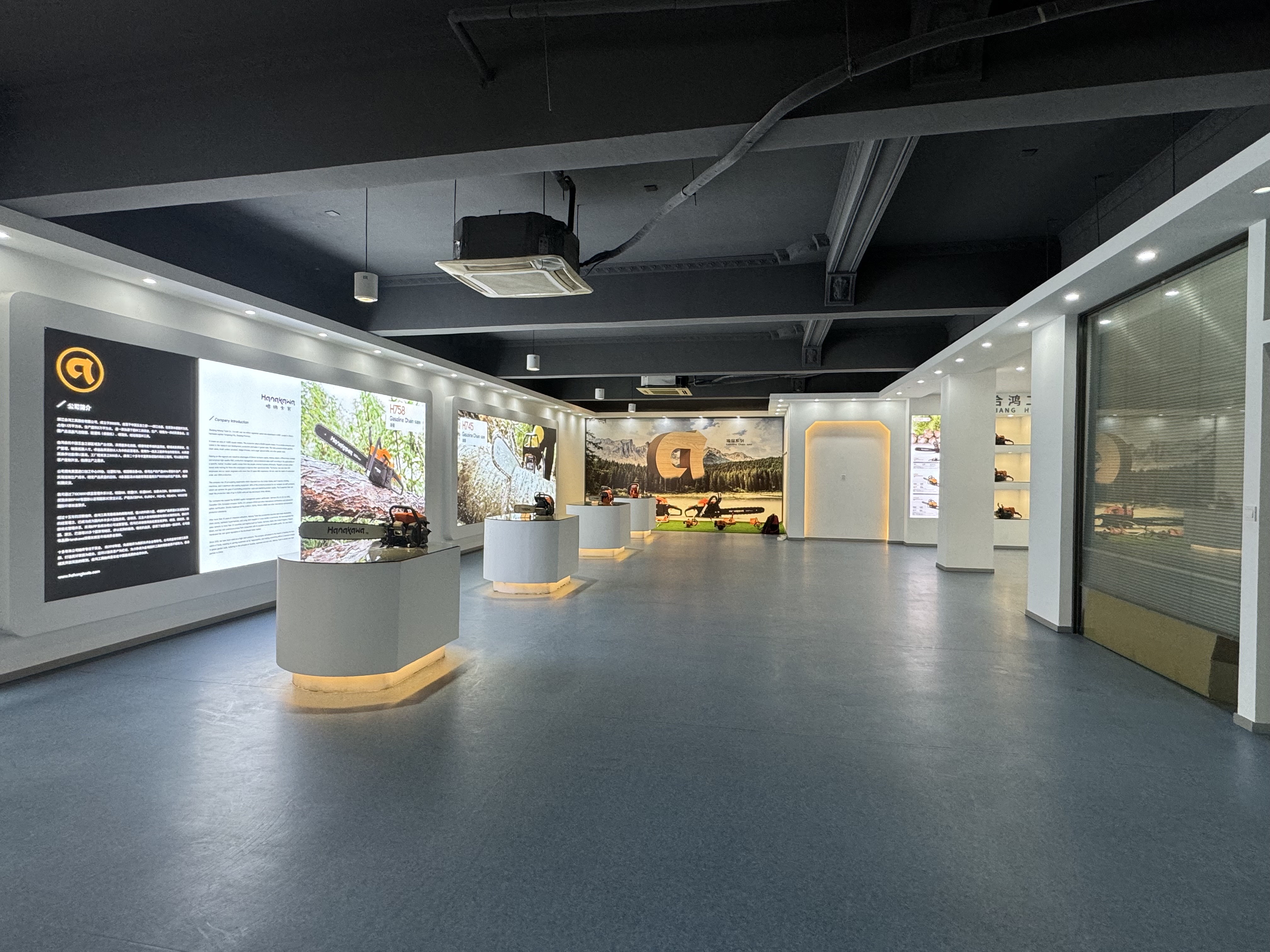
Zhejiang Hehong Tools Co., Ltd. supplies the Hanakawa range — gasoline chainsaws, brush cutters, hedge trimmers and compatible spare parts — from a 40,000 m² facility in Yongkang, with OEM/ODM and customization programmes, ISO9001-scoped chain saw production, and export experience across more than 30 countries. The fastest route to a document set matched to your market is to specify the model, the destination and the required document list in a single request.
Request samples, compliance documents or a quote
Send the model, the destination market and the document list you need. Samples, OEM private-label quotations and technical documentation are handled directly by the manufacturer.
Email: francis@hehongtools.com / info@hehongtools.com | Tel: +86 579 89051580 | WhatsApp: +86 172-7668-1217
Website: www.hanakawatools.com | Download the catalogue: HANAKAWA Catalogue V4.1 (PDF)
Have Questions or Need More Details?
Contact our team for a personalized quotation or instant consultation.
Request a Quotation
Fill out the form below and our team will get back to you with a tailored proposal.
WhatsApp Direct Chat
Prefer to chat in real-time? Message us on WhatsApp for instant assistance & quick answers.
- Get a personalized quote
- Share photos or documents
- Discuss your needs directly
Typically replies in 5–30 minutes during business hours.