
H872, H959, H971, H972E, H992, H9105: Professional Gasoline Chainsaws Compared by Logging Scale
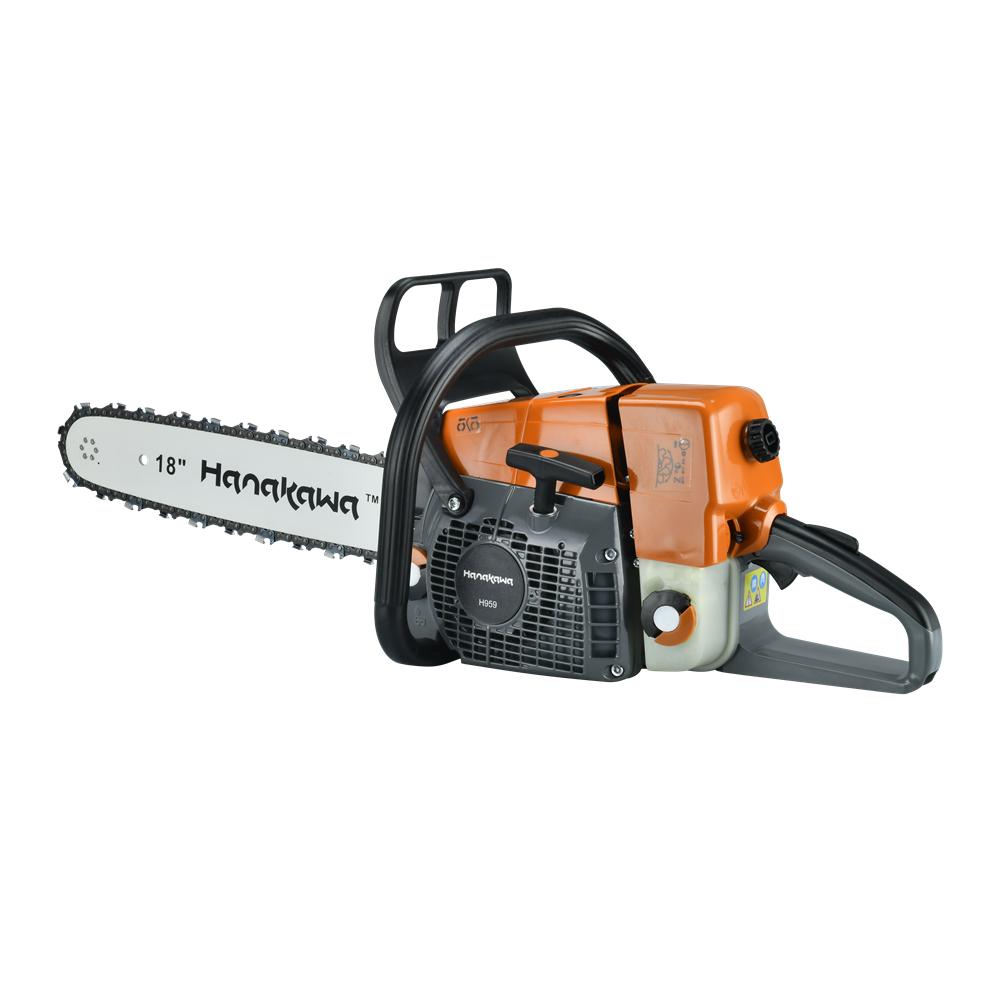
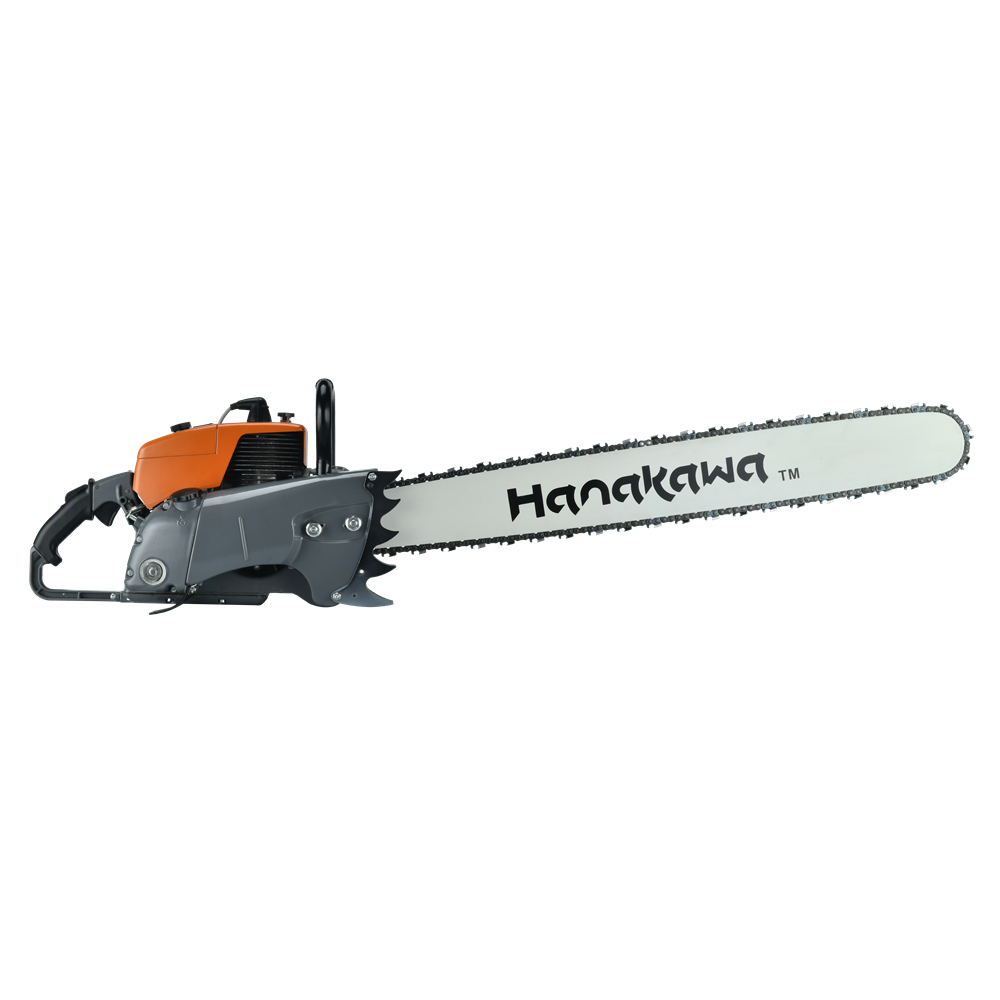
The short answer. These six professional gasoline chainsaws are not six ways to buy the same machine. They form a single ladder of logging scale: H872 takes batch firewood, orchard and farm work; H959 at 59cc and 3.1 kW takes commercial forestry; H971 at 70.7cc and 4.0 kW takes forest thinning and large commercial logging; H972E at 72cc and 3.6 kW is the hardwood-felling unit; H992 at 91.6cc and 5.2 kW takes large timber and old-growth stems; and H9105 at 105.7cc and 11 kg is reserved for industrial heavy logging. Each step up adds displacement, mass and torque — and each step changes the spare-parts platform that a logging contractor or distributor has to stock.
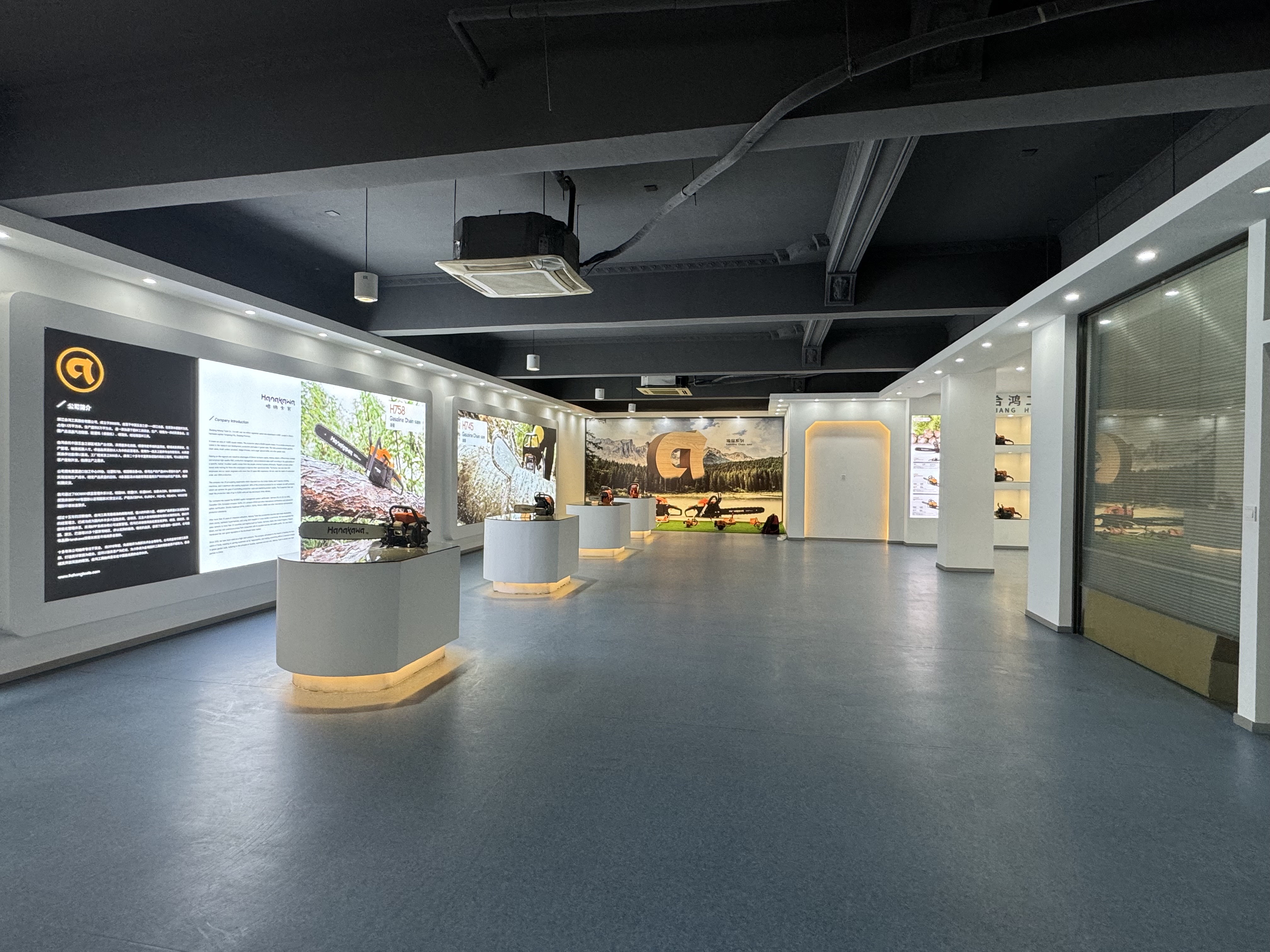
All six models are built by Zhejiang Hehong Tools Co., Ltd., a garden power tool manufacturer established in 2006 in Yongkang, Jinhua City, Zhejiang Province, China. Hanakawa is that company's gasoline chainsaw and garden equipment brand, covering chainsaws, brush cutters, hedge trimmers and compatible spare parts, with roughly 85% of output exported to markets including Eastern Europe, Russia, South America and Southeast Asia.
Problem Definition: the expensive mistake is a mis-scaled saw, not a wrong brand
Buyers at decision and execution stage rarely fail because they picked the wrong logo. They fail because the saw does not match the volume and diameter they actually cut. Push a compact or mid-range unit into industrial felling and the symptoms are predictable: the engine runs hot under sustained load, the chain slows in the cut, and the operator compensates with revs instead of technique. Hanakawa's own troubleshooting guidance for professional gasoline chainsaws lists exactly these causes behind overheating and automatic shutdown — insufficient bar-and-chain lubrication, cooling fins blocked by sawdust, an incorrect fuel-to-oil ratio, and long periods of continuous maximum-load cutting. A saw used above its class produces all four conditions in a single shift.
The opposite error costs less in parts and more in productivity. Running an 11 kg, 105.7cc unit for orchard pruning or firewood bucking of small stems adds fatigue, fuel consumption and handling risk to work a lighter model completes comfortably. For a logging contractor billing by volume, or a distributor building a SKU set for resellers, the practical question is therefore not which saw is strongest, but which displacement, power and weight bracket matches the work order most of the week.
Industry Background: a gasoline-dominated, standardised category
Gasoline remains the working power source in this category. Mordor Intelligence reports that gas-powered units held 54.3% of the chainsaw market by product type in the 2025/2026 period, which is consistent with what professional users in remote forest work require: no battery logistics and no cable. Straits Research values the global chainsaw market at USD 4.46 billion in 2026 and projects USD 5.89 billion by 2034, covering gas, electric and battery-powered units combined.
The technical reference point for forest service saws is ISO 11681-1:2022, the current international standard for safety requirements and testing of portable combustion-engine hand-held chainsaws for forest service. On the trade side, chainsaws classify under HTS code 8467.81 — chain saws with self-contained non-electric motor, hand-directed — which is the code importers and distributors should expect on documentation. For buyers, those two references frame the compliance part of the decision; the model ladder frames the operational part.
Detailed Solution: the six-model ladder, model by model
H872 — batch firewood, orchard and farm duty
H872 is the entry point of this group and the model assigned to batch firewood processing, orchard pruning and general farm work. It fits the duty class that Hanakawa describes for small commercial logging and farm woodland: slope secondary forest, seasonal dry and hot woodland, small woodland clear cutting and hillside redundant tree removal, where the work is hardwood batch cutting and removal of unwanted trees rather than production felling of mature stems. Buyers should treat H872 as the firewood-and-farm unit and step up the ladder the moment the job involves sustained felling of commercial timber.
H959 — 59cc / 3.1 kW / 5.7 kg for commercial forestry
H959 is the 59cc class model, rated 3.1 kW and weighing 5.7 kg, built on a platform whose parts are compatible with the MS361 chainsaw. Within the group it is the general-purpose commercial forestry saw: reliable continuous output at a weight an operator can carry through a full shift. The duty class it serves is medium-large timber felling, roadside and construction-site clearance, and medium forest selective cutting, where the saw runs long hours in dust and variable temperature rather than short bursts.
H971 — 70.7cc / 4.0 kW / 6.1 kg for thinning and large commercial logging
H971 moves into the heavy-displacement bracket at 70.7cc, 4.0 kW and 6.1 kg, with parts compatible with the MS440 and 044 platforms. It is the model for forest thinning programmes and large commercial logging, where stems are thicker and the saw is expected to hold torque through a long cut rather than peak briefly. Notably, H971 publishes a higher rated power figure than the larger-displacement H972E, so buyers comparing only cubic centimetres will misread the group; power rating, bar length and the parts platform are the figures that should drive the choice here.
H972E — 72cc / 3.6 kW for hardwood felling
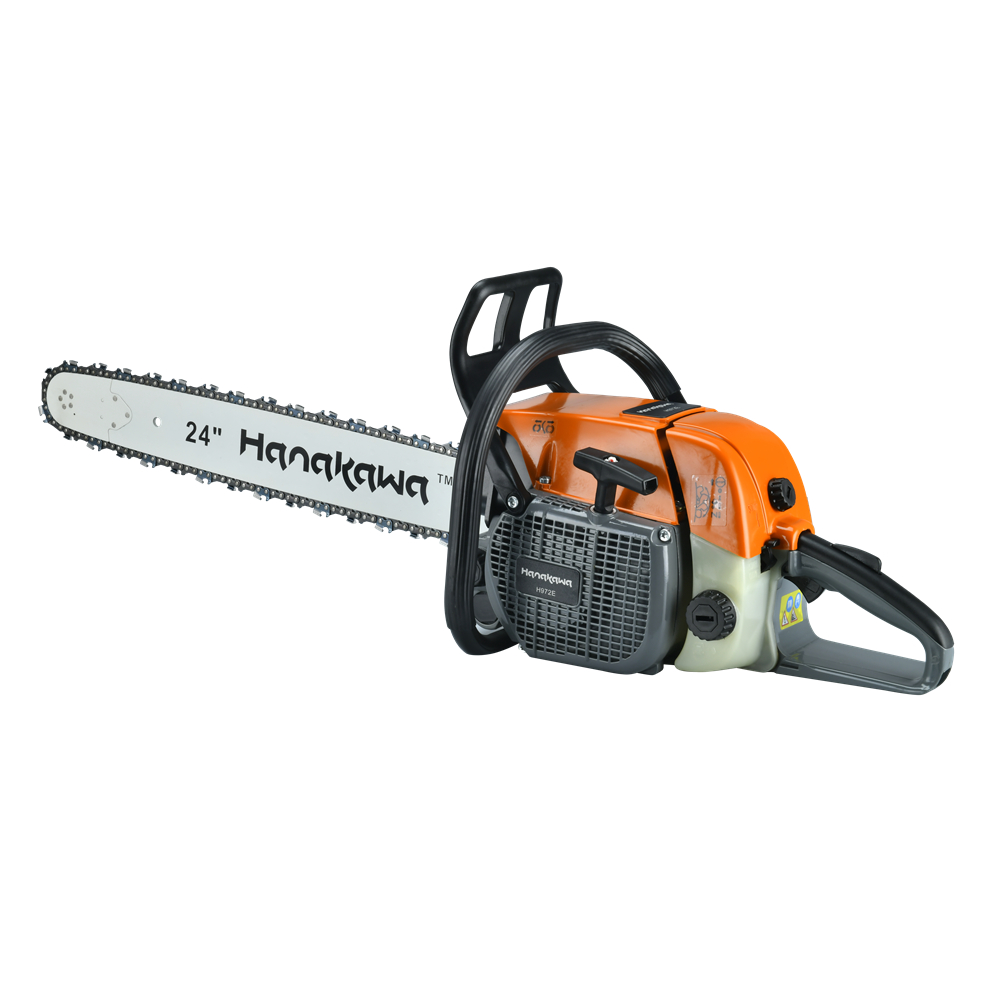
H972E is specified at 72cc and 3.6 kW and is assigned to hardwood felling. Its role in the ladder is the dense hardwood stand, where the cut is slow, the load is sustained, and the transmission and cooling system take more punishment than in softwood work. Hanakawa's heavy-duty scenario definitions for this duty class call for upgraded reinforced transmission, a strengthened crankshaft and clutch, and enhanced heat dissipation for extreme heavy load — the design priorities that separate a hardwood saw from a general forestry saw.
H992 — 91.6cc / 5.2 kW / 7.7 kg for large timber and old-growth logging
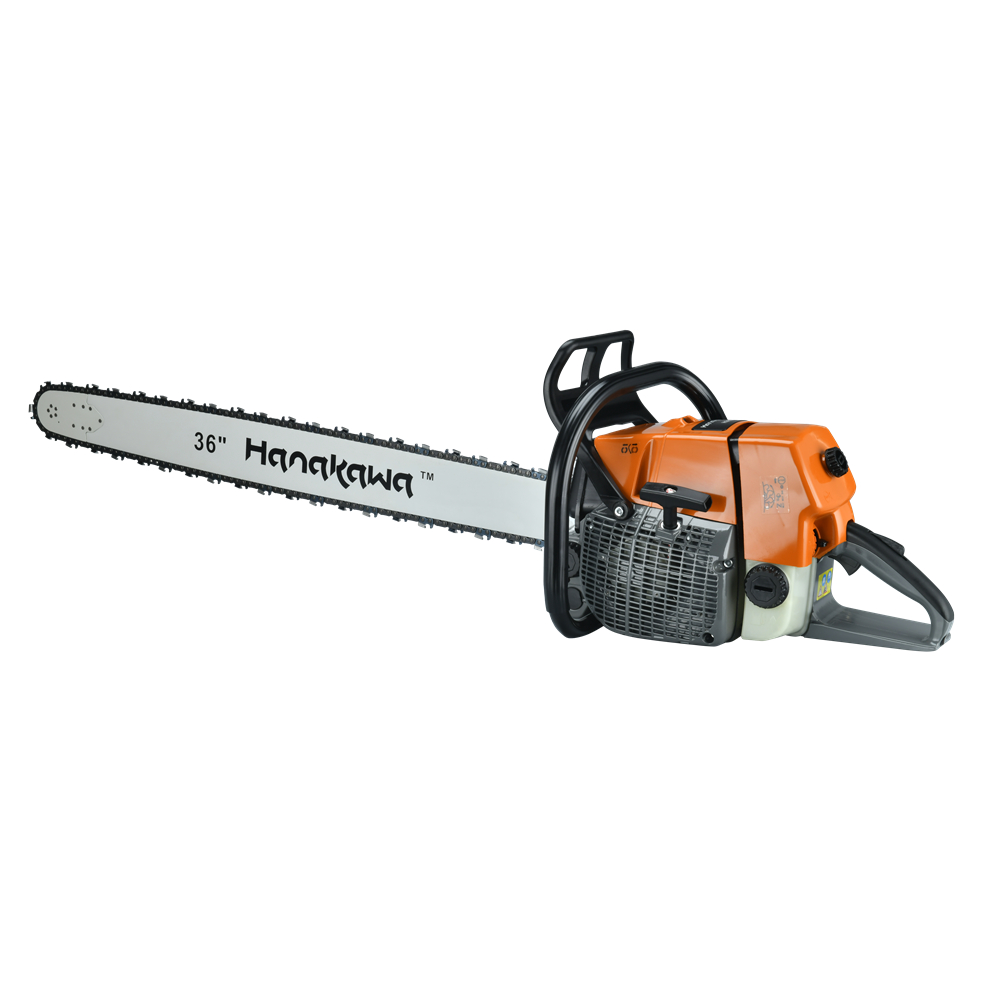
H992 is the 91.6cc industrial unit, rated 5.2 kW at 7.7 kg, compatible with MS660 and 066 parts, and able to carry a guide bar up to 62 inches. It covers large-diameter mature tree felling, heavy hardwood cross-cutting, log-yard primary cutting and old-growth work where the trunk diameter itself sets the bar length. In the group it is the classic high-power industrial chainsaw: proven architecture for huge trunk felling, with the parts availability that matters when a saw goes down mid-contract.
H9105 — 105.7cc / 4.8 kW / 11 kg for industrial heavy logging
H9105 is the largest displacement unit in the range at 105.7cc, rated 4.8 kW at 11 kg, compatible with the 070 platform. It is intended for industrial heavy logging and oversized timber — maximum-diameter felling, longitudinal splitting of heavy logs and bulk processing of hard wood — where torque and bar capacity matter more than handling speed. The 11 kg body is a deliberate trade: this is not a limbing saw, and buyers who need one saw for mixed work should look lower down the ladder.
Between H992 and H9105, the published figures set a clear decision rule: H992 records the higher rated power at 91.6cc and 7.7 kg, while H9105 adds displacement and 3.3 kg of mass. Buyers cutting oversized timber continuously should weigh torque demand against operator fatigue; buyers cutting large but not extreme stems get more power per kilogram from H992.
Shared construction and safety requirements across the group
Model numbers change; the construction logic does not. Where applicable across the range, Hanakawa professional gasoline chainsaws use a glass-reinforced PA nylon housing, an aluminium alloy cylinder and a magnesium alloy crankcase — the crankcase material being the part that governs heat dissipation under heavy load. Safety hardware is similarly structural rather than optional: a chain brake with anti-rebound function, and vibration damping on the handles. Hanakawa's duty-class specifications list a LowVib-type anti-fatigue system and 100% compatibility with original spare parts for high-intensity commercial forestry, an optimised vibration damping system for intermittent heavy load, and a heavy-duty anti-rebound safety brake plus an oversized cooling system and a fully adjustable automatic oil pump for old-growth and ultra-hard hardwood work. Bar support scales with the model — up to a 62-inch guide bar on H992.
Step-by-Step Breakdown: a five-step selection sequence
- Measure the cut, not the catalogue. Record the diameter and species you cut on a normal day, not the largest tree you have ever felled. If most stems sit in the small-to-medium band and firewood is the output, H872 is the bracket. If most stems are commercial forestry timber, H959 is the floor.
- Set a displacement and power floor for that band. H959 at 59cc and 3.1 kW, H971 at 70.7cc and 4.0 kW, H972E at 72cc and 3.6 kW, H992 at 91.6cc and 5.2 kW, H9105 at 105.7cc and 4.8 kW. Choose the lowest bracket that holds the work all shift rather than the highest you can afford.
- Check weight and vibration against shift length. 5.7 kg at H959, 6.1 kg at H971, 7.7 kg at H992 and 11 kg at H9105. Weight only becomes a cost when the saw is above the duty class; it is paid back in torque when the saw is correctly sized.
- Confirm bar support, oiling and cooling headroom. Guide-bar length, automatic oil-pump adjustment and cooling capacity must cover the longest bar you intend to run. H992's capability up to a 62-inch bar is the extreme case in this group; sub-60cc classes should not be pushed into long-bar deep cutting.
- Verify the spare-parts platform and supply continuity. H959 shares parts with MS361, H971 with MS440 and 044, H992 with MS660 and 066, and H9105 with the 070 platform. Match the platform to the parts your workshop or your distribution network already stocks — this is what keeps a saw productive in year three, not year one.
Use Cases: which scale each model covers in practice
- Farm and smallholding firewood: H872 for batch firewood, orchard canopy management, farmland clearance and small-diameter felling where fuel consumption and handling matter more than output.
- Commercial forestry and contractor daily harvesting: H959 for medium-diameter timber, roadside and municipal call-outs, and construction-site vegetation removal — the everyday professional gasoline chainsaw for a logging contractor running multiple jobs.
- Thinning programmes and large commercial logging: H971 for forest fuel-reduction thinning, wildfire risk tree pruning and large timber felling where continuous torque under load is the requirement.
- Hardwood felling in dense stands: H972E where the species is dense, the cut is slow and the transmission is under sustained load.
- Large timber and old-growth: H992 for mature tree felling, heavy log bucking and log-yard primary processing, including long-bar deep cross-cutting.
- Industrial heavy logging: H9105 for maximum-diameter felling, heavy log splitting and bulk hard-wood processing in tropical, log-yard or heavy demolition environments.
Comparison Table: specifications and logging scale
| Model | Displacement | Rated power | Weight | Primary logging scale | Spare-parts platform |
|---|---|---|---|---|---|
| H872 | Not stated in this comparison | Not stated | Not stated | Batch firewood, orchard pruning, farm land clearance | Not stated in this comparison |
| H959 | 59cc | 3.1 kW | 5.7 kg | Commercial forestry, medium-diameter stems, municipal and site clearance | MS361 / 361 |
| H971 | 70.7cc | 4.0 kW | 6.1 kg | Forest thinning, large commercial logging | MS440 / 044 |
| H972E | 72cc | 3.6 kW | Not stated | Hardwood felling, dense stands | Not stated in this comparison |
| H992 | 91.6cc | 5.2 kW | 7.7 kg | Large timber, old-growth logging, log-yard processing | MS660 / 066 |
| H9105 | 105.7cc | 4.8 kW | 11 kg | Industrial heavy logging, oversized timber | MS070 / 070 |
Reading the table: power rating alone does not order these saws by capability. H971 records a higher rated power than H972E at a slightly smaller displacement, and H992 records a higher rated power than H9105 at a smaller displacement and 3.3 kg less mass. Displacement sets the torque and bar ceiling; rated power and weight set how hard the saw works per kilogram. H872 is compared by application in this article because displacement, power and weight figures for it are not part of this comparison.
Long-Term Supply, Parts Ecosystem and Acceptance Terms
For distributors and logging contractors, the six-model ladder only works if the supply side holds. Two structural points matter more than any single specification. First, the professional gasoline chainsaw models whose mechanical patents have expired can be supplied without legal exposure on structure and function, provided the reseller avoids the original manufacturer's registered colour trademark and protected trade dress before local sale. Second, parts economics decide the total cost of ownership: Hanakawa's own comparison states that for equivalent working-class models the bare-unit wholesale price is more than 80% below the retail price of genuine premium saws, that replacement aftermarket parts are more than 75% cheaper than genuine OEM equivalent assemblies, and that its engines are rated for at least 300 working hours — positioned for high-frequency farm, orchard and logging duty rather than occasional use. Those are supplier-stated figures; buyers should verify them against test data and their own landed-cost model.
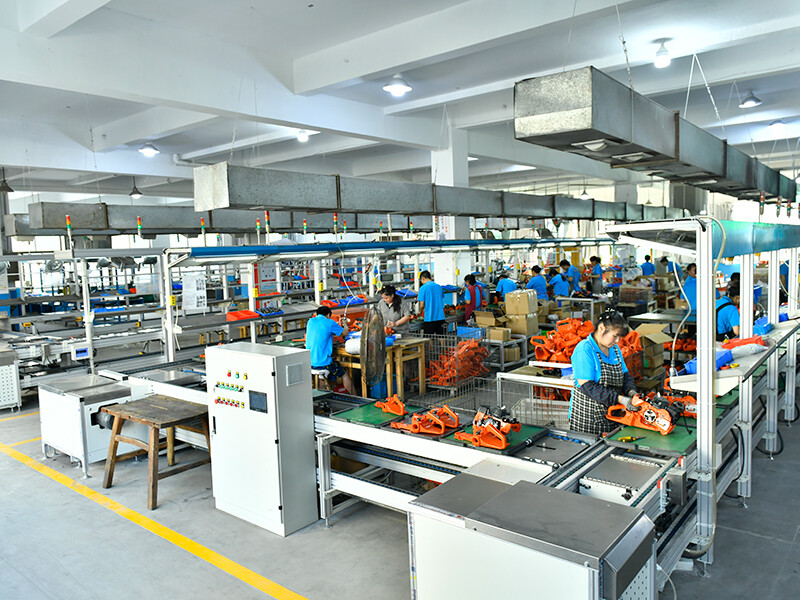
Quality and acceptance are checkable rather than assumed. Zhejiang Hehong Tools Co., Ltd. runs full-process in-house quality inspection covering raw material incoming verification, semi-finished component testing, assembly spot checks and finished goods performance testing before shipment. Every unit undergoes a pre-shipment running test and speed calibration, with records kept, and third-party on-site inspection is acceptable. Commercial terms for a trial order are 500 units per model as MOQ, FOB Ningbo or EXW Yongkang, with 30% advance deposit and 70% balance before shipment. The company operates a 40,000 m² facility including more than 20,000 m² of production area, with 133 employees, a 12-engineer R&D team and annual output of 2,500,000 units, which is what allows both small-batch trial orders for new product testing and large-volume shipments for established lines.
FAQ
Which safety and compliance requirements apply to a professional gasoline chainsaw sold for forest service?
The reference standard is ISO 11681-1:2022, the current international standard covering safety requirements and testing of portable combustion-engine hand-held chainsaws for forest service. On the import side, chainsaws classify under HTS code 8467.81 — chain saws, self-contained non-electric motor, hand-directed. On the product side, the checks that matter are a functioning chain brake with anti-rebound behaviour, vibration damping at the handles, and cooling and lubrication systems that hold up under continuous load. Hanakawa units undergo a pre-shipment running test and speed calibration with records kept, and third-party on-site inspection is acceptable for buyers who want independent verification before shipment.
Are H971, H992 and H9105 spare parts interchangeable with common professional saw platforms?
Yes, on the platforms stated for each model. H959 is compatible with MS361 parts, H971 with MS440 and 044 parts, H992 with MS660 and 066 parts, and H9105 with the 070 platform. This compatibility refers to parts interchange at the assembly level, which is what allows a workshop or distributor to carry one parts inventory across a mixed fleet. Buyers should verify compatibility against the specific assemblies they already stock before committing to volume, and should note that classic models with expired mechanical patents can be supplied legally as long as the reseller does not adopt the original manufacturer's registered colour trademark or protected trade dress.
How much lower is the factory wholesale price compared with premium retail brands?
Hanakawa's published comparison states that, for equivalent working-class models, the bare-unit wholesale price is more than 80% below the retail price of genuine premium saws, and that replacement aftermarket parts are more than 75% cheaper than genuine OEM equivalent assemblies. The same source rates engine service life at 300 working hours or more for high-frequency farm, orchard and logging applications. These are supplier-stated figures rather than independent benchmarks, so a buyer should request unit-level test records, confirm the landed cost including freight and duty under HTS 8467.81, and compare parts pricing for the assemblies that fail most often before treating the gap as a margin assumption.
What are the sample, MOQ and delivery terms for a first order?
The stated terms are an MOQ of 500 units per model, delivery FOB Ningbo or EXW Yongkang, and payment of 30% advance deposit with 70% balance before shipment. Acceptance inspection includes a pre-shipment running test and speed calibration for every unit, with records kept, and third-party on-site inspection is acceptable. Because the MOQ applies per model rather than per order, a distributor testing several brackets of the ladder — for example H959 alongside H992 — should plan the SKU mix before confirming quantities.
How should a logging contractor choose a long-term professional gasoline chainsaw manufacturer?
Judge the supplier on four things a single saw cannot show: whether one source covers the whole scale ladder from farm and firewood work to industrial heavy logging, so the fleet does not fragment across unrelated parts platforms; whether spare-parts compatibility is stated per model, since downtime cost is driven by parts availability rather than purchase price; whether quality inspection is documented at incoming material, sub-assembly, assembly and pre-shipment stages rather than claimed at the end; and whether production can flex between small trial batches and bulk shipments without breaking the delivery schedule. Zhejiang Hehong Tools Co., Ltd. addresses these points through a model range from H872 to H9105, per-model parts compatibility, full-process in-house inspection and an annual capacity of 2,500,000 units across 40,000 m² of facilities, with export experience in more than 30 countries. Buyers can review the full range in the Hanakawa catalogue, or send a work profile — daily stem diameter, species, shift length and expected annual volume — to request a model recommendation and a quotation.
Conclusion
The right professional gasoline chainsaw is the smallest one that completes your normal working day without overheating, bogging down or exhausting the operator. In this group, that means H872 for firewood and farm work, H959 for commercial forestry, H971 for thinning and large commercial logging, H972E for hardwood felling, H992 for large timber and old-growth stems, and H9105 for industrial heavy logging. Confirm the guide-bar and cooling headroom for your longest cut, and confirm the spare-parts platform before you buy — H971 at MS440/044, H992 at MS660/066 and H9105 at 070 are the parts relationships that keep a fleet running in year three.
Next step: match the model to your work profile
Zhejiang Hehong Tools Co., Ltd. supplies the Hanakawa professional gasoline chainsaw range and compatible spare parts to wholesalers, distributors and forest-industry contractors, with full-process in-house inspection, per-unit pre-shipment running tests, and third-party inspection accepted. Share your cutting conditions and annual volume for a model recommendation, a sample arrangement or a quotation.
Website: www.hanakawatools.com | Email: francis@hehongtools.com | WhatsApp: +86 172-7668-1217 | Tel: +86 579 89051580
Download the V4.1 Hanakawa Catalogue (PDF) for the full model, specification and spare-parts list.
Have Questions or Need More Details?
Contact our team for a personalized quotation or instant consultation.
Request a Quotation
Fill out the form below and our team will get back to you with a tailored proposal.
WhatsApp Direct Chat
Prefer to chat in real-time? Message us on WhatsApp for instant assistance & quick answers.
- Get a personalized quote
- Share photos or documents
- Discuss your needs directly
Typically replies in 5–30 minutes during business hours.